Discover expert insights on dentist website design to attract new patients. Learn about mobile optimization, local SEO, trust-building elements, and choosing the right design path for your dental practice's success in 2025.
Why Your Dental Practice's Online Presence Determines Your Success
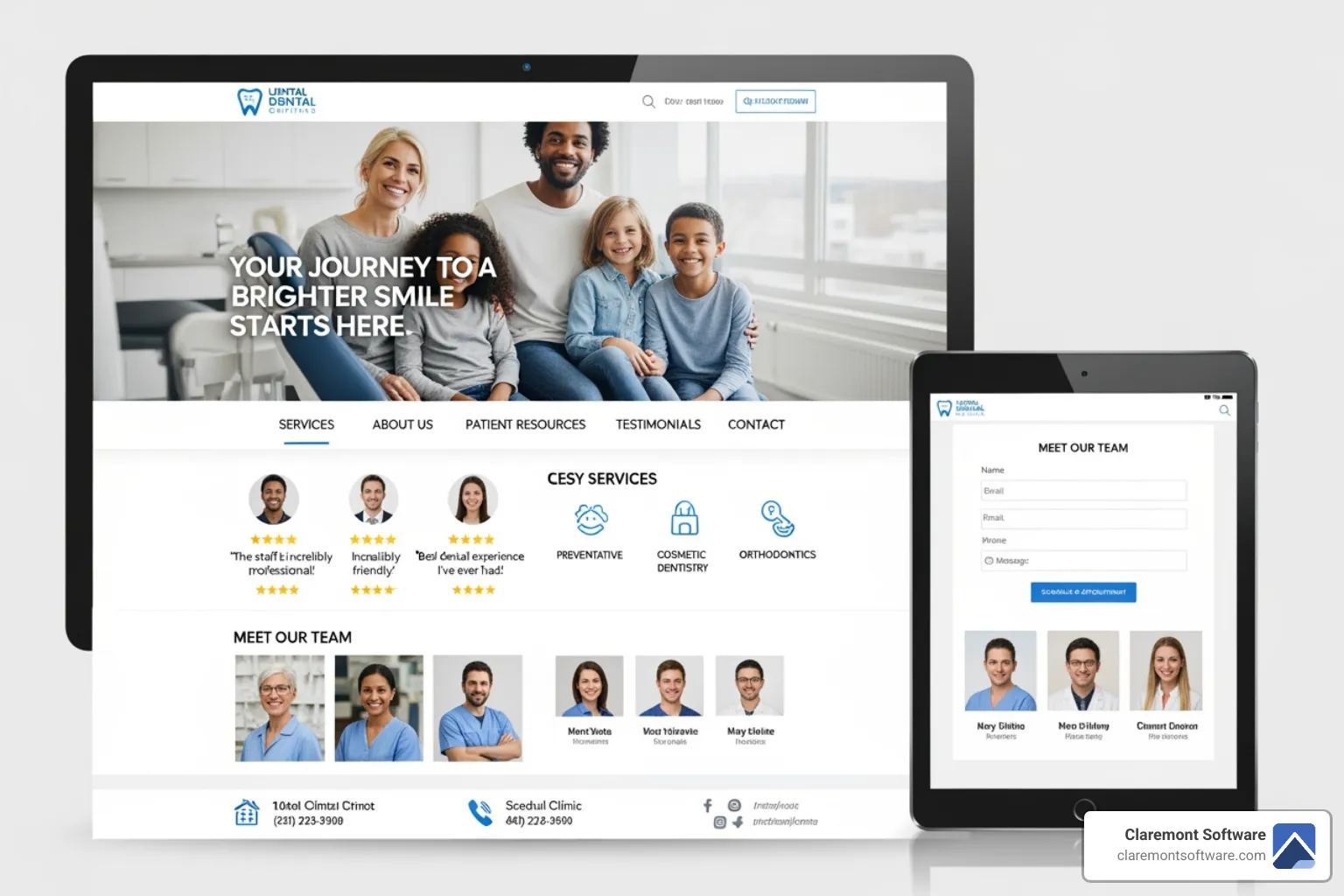
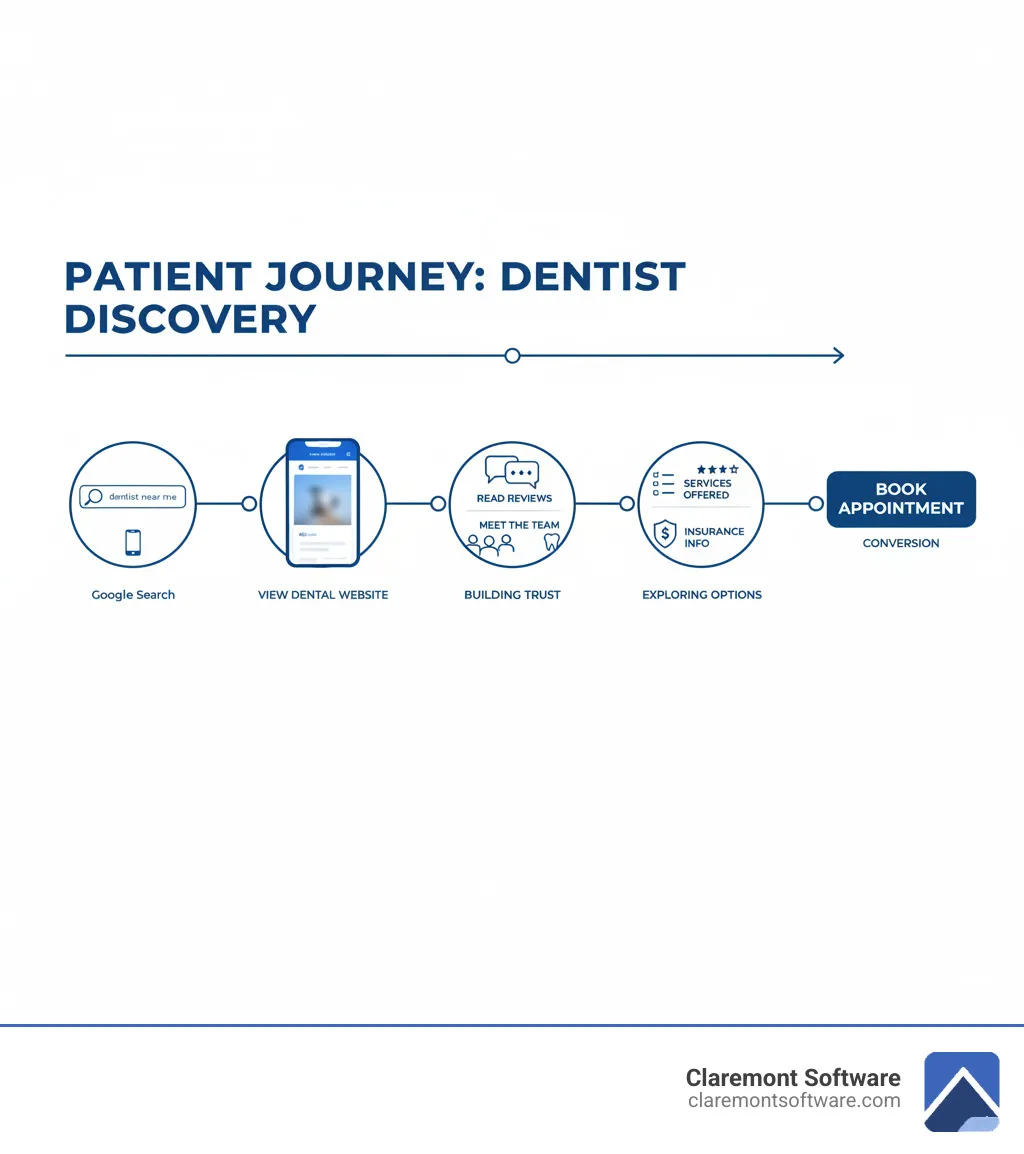
Dentist website design is the foundation of attracting new patients in 2025. Today, patients find you by searching "dentist near me" on their phones. They scroll through websites, judging and deciding who feels trustworthy enough to book. Your website is your digital front door, and you have just a few seconds to make a good impression.
A high-performing dental website must include:
- Patient-focused design with easy navigation
- Mobile-first responsiveness for smartphone users
- Trust signals like real team photos and patient testimonials
- local SEO services optimization to rank in "near me" searches
- Online booking that converts visitors into appointments
- Fast load times and ADA accessibility compliance
- Educational content that addresses patient concerns
With over 80% of Americans dreading the dentist, an outdated, slow, or confusing site will lose potential patients instantly. A modern website does more than look professional; it builds trust with real photos, addresses anxiety with clear explanations, and makes booking an appointment simple.
In a crowded market with over 200,000 dentists in the U.S., the practices that win are those with websites that convert visitors into patients. I'm James Smith, and with over 25 years of experience designing websites for dental practices, I've seen how a great site becomes the #1 source of new patients. This guide will walk you through everything you need to know.
The Essential Elements of a High-Converting Dental Website
Your dental website works 24/7 to either win new patients or send them to competitors. A beautiful site is useless if it doesn't convert visitors into appointments. Effective dentist website design focuses on building trust, answering questions, and making it incredibly easy to book.
Think of your site as the first conversation with a nervous patient. It needs to be a reassuring handshake that says, "You're in good hands." User experience (UX) is everything. If visitors can't find what they need in seconds, they're gone. This is why patient-centric content and clear navigation are non-negotiable.
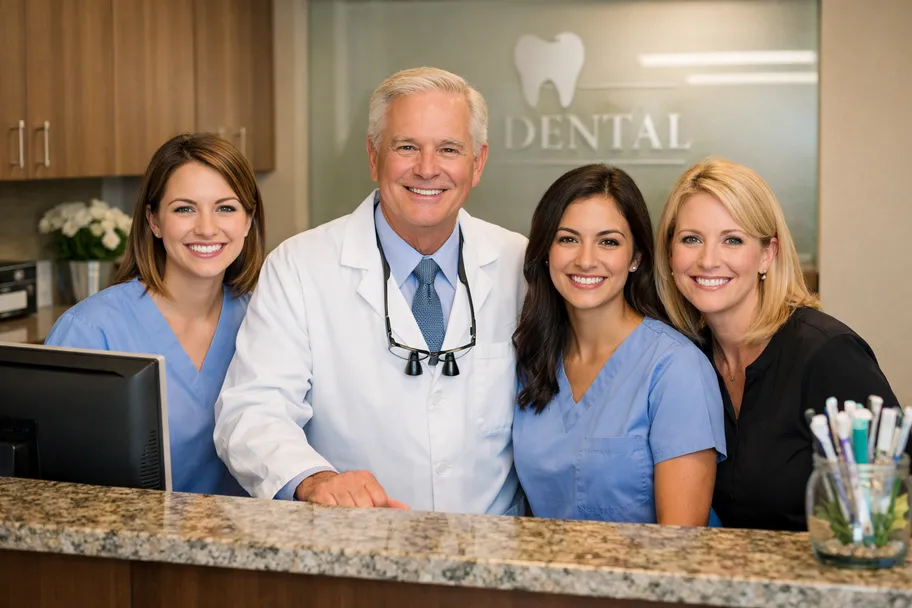
Trust signals are critical in dentistry. Stock photos don't work. People want to see your actual team, your real office, and hear from patients who were just as nervous as they are.
Essential Elements for Your Dentist Website Design
These are the core components that turn browsers into new patients.
- Easy-to-find contact info: Your phone number should be in the header of every page and clickable on mobile. A "Book Appointment" button should always be visible. Don't make people work to contact you.
- Prominent calls-to-action (CTAs): Every page needs a clear purpose. Guide visitors with obvious next steps like "Schedule Your Consultation" or "Meet the Team."
- Real office and team photos: Authentic images of your staff and practice build instant credibility and help anxious patients feel familiar with you before they arrive. This is vital for community-focused practices in areas like Gurnee or Libertyville.
- Patient testimonials and reviews: Social proof calms nerves. Feature specific stories, not just star ratings. "Dr. Smith helped my terrified daughter" is far more powerful than "Great service!"
- Before-and-after galleries: For cosmetic work like veneers or implants, visual results speak louder than words and help patients imagine their own change.
- Personal dentist bios: Write warm, approachable bios. Share why you became a dentist or what you love about your community. People connect with people, not just credentials.
- Insurance and financing information: Clearly state which plans you accept and what payment options you offer. This removes a major barrier that stops people from calling.
Building Trust and Addressing Patient Concerns
Your dentist website design must actively build confidence.
- Use simple, jargon-free language. Explain treatments in plain English, focusing on patient benefits like less pain or faster results. Instead of "CAD/CAM technology," say "same-day crowns."
- Address dental anxiety directly. Acknowledge that many patients are nervous and explain your sedation options or calm environment. This can become a key selling point.
- Showcase technology's benefits. Explain how a new scanner means no more gag-inducing impressions or how a laser means faster healing.
- Highlight safety and sterilization protocols. Reassure patients by clearly communicating your commitment to their safety on your website.
- Communicate your unique selling propositions (USPs). What makes you different? Evening appointments? A lifetime warranty on work? Make your unique value impossible to miss. If your website isn't bringing you leads, it's often because your value isn't clear.
Technical Foundations: Mobile, Accessibility, and Local SEO
A beautiful website is useless if it loads slowly or doesn't appear in Google searches. Your dentist website design needs a rock-solid technical foundation to bring patients through your door. When someone has a toothache, they're searching on their phone. If your site isn't fast and mobile-friendly, they'll move on in seconds.
Mobile-Friendliness and Performance Optimization
Google's mobile-first indexing means your mobile site determines your search rankings. A poor mobile experience makes you invisible to most potential patients.
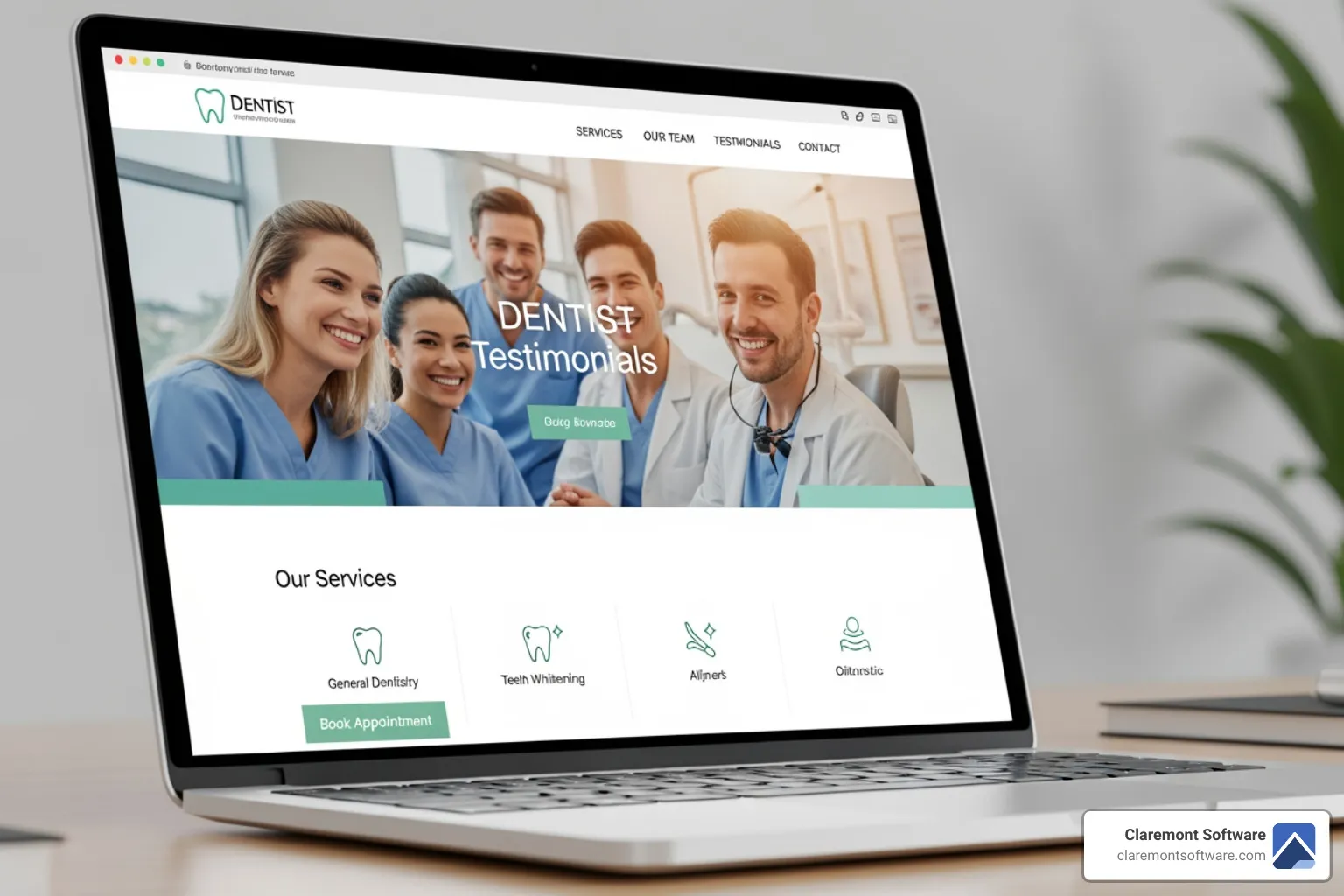
- Responsive design is mandatory. Your site must adapt to any screen, with large, tappable buttons and readable text without zooming.
- Fast loading times are critical. If your site takes more than a few seconds to load, you're losing revenue. We use tools like Google's Lighthouse to measure and optimize performance, ensuring a fast experience that Google rewards with higher rankings. As detailed in our Mobile First Design article, ignoring mobile is costly.
- Scannable text with clear headings and short paragraphs makes information easy to digest on small screens.
Accessibility and Legal Compliance
Your website must be accessible to every potential patient. We build to WCAG guidelines to ensure your site works for people with disabilities, including those using screen readers or keyboard-only navigation.
This includes writing descriptive alt text for images, so a screen reader can describe your team photo to a visually impaired user. We also ensure your privacy policy is clear and prominent. While your marketing site doesn't store protected health information (PHI), HIPAA compliance is a consideration for secure forms and patient portals. Finally, your content must adhere to the ADA Code of Professional Conduct, avoiding any false or misleading advertising.
The Role of local SEO services
When someone in Gurnee or Libertyville searches "dentist near me," Local SEO puts your practice at the top of the list.
- Google Business Profile: This free tool is the foundation of local visibility, showing your hours, reviews, and location on Google Maps and in search results.
- NAP Consistency: Your Name, Address, and Phone number must be identical everywhere online to avoid confusing search engines and hurting your rank.
- Local Keywords: We weave terms like "dental implants in Gurnee" into your content to attract nearby patients. For practices serving multiple towns in Lake County, we create dedicated location-specific pages.
- Online Reviews: Positive Google reviews boost your rankings and provide powerful social proof.
- Embedded Google Map: A map on your contact page provides easy, one-tap directions.
As we cover in our article on 5 Common SEO Mistakes Local Businesses Make and How to Fix Them, a strong technical foundation ensures every potential patient in your area can find and use your site.
Showcasing Services and Driving Patient Conversions
Your website's most important job is turning visitors into booked appointments. This requires showing patients why they should choose you and making the scheduling process effortless.
Effectively Showcasing Your Dental Services
Patients search for specific treatments, not "general dentistry." That's why dedicated pages for each service are crucial. A page for "Dental Implants in Gurnee" or "Cosmetic Dentistry in Libertyville" can dive deep into what patients need to know.
These pages should feature detailed, benefits-focused descriptions in plain English. Focus on what the treatment means for them—a confident smile, relief from pain, or same-day crowns. Including an FAQ section on service pages to answer common questions like "Do dental implants hurt?" builds trust and improves search rankings. Como Park Dentistry's service page FAQs are a great example of this. Answering questions upfront positions you as a trusted resource and encourages patients to book.
Improving Patient Conversion Rates
A great website must convert. Smart dentist website design removes every barrier between a patient's need and a booked appointment.
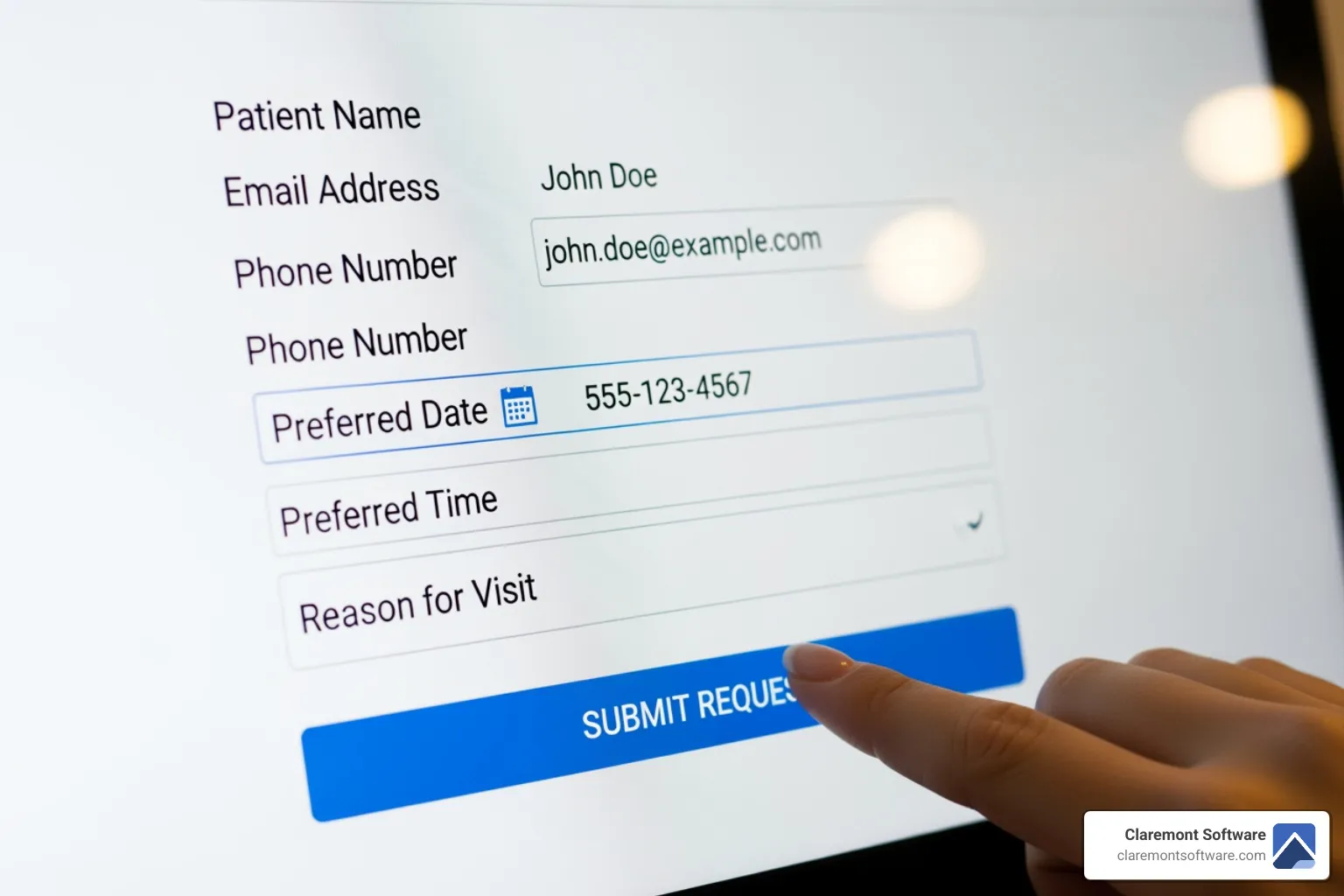
- Online appointment booking is essential. Patients want to schedule 24/7, not just during office hours.
- Interactive forms convert better than static ones. A step-by-step form that asks simple questions feels more like a conversation and provides your team with better information. This is a key part of custom web design that drives results.
- Click-to-call buttons are vital for mobile users, especially those seeking emergency care.
- New patient specials should be featured prominently to give visitors a nudge to choose your practice.
- Clear next steps on every page guide visitors toward action, whether it's "Schedule Your Cleaning" or "Request a Consultation."
Choosing Your Dentist Website Design Path: DIY vs. Professional
When building your dental website, you face a choice: do it yourself, hire a freelancer, or partner with a professional agency. For a critical patient acquisition tool, the stakes are high.
- DIY website builders like Wix and Squarespace are affordable but limited. They lack the specialized features and local SEO needed to convert anxious patients and often result in generic-looking sites. The "cheap path" becomes expensive when it fails to bring in new patients.
- Freelance web designers offer more customization, but their expertise varies. Many focus on aesthetics and may lack the deep understanding of patient psychology, conversion strategy, and local SEO that a dental practice requires.
- A professional agency specializing in healthcare builds patient acquisition systems, not just websites. We understand how to address dental anxiety, what trust signals matter, and how to design for conversions and ROI.
| Feature | DIY Website Builder (e.g., Wix, Squarespace) | Freelancer | Professional Agency (e.g., Claremont Software) |
|---|---|---|---|
| Cost | Low monthly fee (often cheap upfront) | Mid-range (can vary greatly) | Higher upfront investment (but often higher ROI) |
| Time | Quick to launch a basic site | Moderate, depends on freelancer's schedule | Moderate to longer (due to comprehensive strategy & custom work) |
| Customization | Limited by templates, can look generic | Moderate to high (depends on skill & budget) | High (bespoke design, custom to your brand & goals) |
| SEO | Basic tools, often requires manual effort, can be difficult to rank locally | Varies greatly by freelancer's SEO expertise | Comprehensive local SEO strategy, ongoing optimization |
| Patient Focus | Generic, not dental-specific | May lack deep understanding of dental patient journey | Deep understanding of dental patient psychology and conversion best practices |
| ROI | Often low, may not attract new patients effectively | Inconsistent, depends on quality of work | High (designed to attract and convert patients, measurable results) |
| Support | Template-based, often impersonal | Limited, dependent on individual | Dedicated, ongoing support and strategic partnership |
Key Considerations for Your Dentist Website Design
The right choice is about strategic investment, not just the lowest price.
- Budget: Think in terms of value and return on investment. A cheap site that brings zero patients is more costly than a professional site that brings in several new patients a month. Our guide on how much a small business website should cost in 2025 explores this further.
- Timeline: A custom website takes longer to build (typically several weeks to a couple of months) because it involves a strategic process designed to deliver long-term results.
- Technical Expertise: Consider who will manage mobile responsiveness, security, HIPAA-compliant forms, and SEO updates. A professional partner handles this for you.
- Long-Term Goals: If you want a powerful patient acquisition tool that positions you as the go-to dentist in Lake County, you need a solution built for that purpose.
- Patient Acquisition Focus: Your website's job is to convert visitors into patients. When choosing the right web design partner for your small business, find one who understands this and delivers measurable results.
Latest Trends and Inspiring Dental Website Examples
Staying current with dentist website design trends isn't about chasing fads; it's about meeting patient expectations and gaining a competitive edge in markets like Lake County, IL. The best dental websites in 2025 balance modern aesthetics with strategic functionality.
Key trends include:
- Minimalist design with bold typography: Clean layouts and striking fonts create a sophisticated, approachable feel.
- Dynamic visuals: Video backgrounds showing your office or team capture attention and convey personality far better than static images. Tend uses modern video to give visitors an instant feel for their brand.
- Unique branding and storytelling: Practices are moving beyond generic stock photos. Some use themed concepts or playful aesthetics, like the 70s-inspired design at Grand Street Dental. This helps you stand out.
- Interactive elements: Quizzes, smile simulators, and before-and-after sliders turn passive browsing into active engagement, providing value and keeping visitors on your site longer.
- Highlighting patient comfort: Showcasing amenities, sedation options, and advanced technology directly addresses patient anxiety.
- Transparent pricing and membership plans: Displaying costs, in-house plans, and financing options builds trust and removes a major barrier to booking.
Of course, mobile-first design is the standard, as most patients are searching on their phones. Our approach combines these modern trends with a relentless focus on patient conversion, ensuring your website not only looks great but actively grows your practice.
Frequently Asked Questions about Dental Website Design
We talk to dental professionals in Gurnee, Libertyville, and across Illinois every week. Here are answers to the most common questions.
How much does a new dental website typically cost?
The cost depends on your goals. A DIY site on Wix or Squarespace is cheap upfront but often fails to attract patients, making it expensive in the long run due to lost revenue. A freelancer is a mid-range option with inconsistent results.
A professional agency represents a higher initial investment, often starting in the several thousands. However, we build patient acquisition machines, not just websites. Our services include comprehensive local SEO, conversion-focused design, and ongoing support. A professional website is an investment that should pay for itself quickly by attracting new patients. For a deeper dive, see our guide on how much a small business website should cost in 2025. Remember to also budget for ongoing costs like hosting and maintenance.
How long does it take to build a dental website?
A DIY site can be live in days. A freelancer may take a few weeks to two months. A comprehensive, custom dentist website design from an agency like ours typically takes four to twelve weeks. This timeline allows for a thorough process including findy and strategy, custom design, development, and revisions. Taking the time to build it right ensures you get a site that works for your practice for years.
What is HIPAA compliance and how does it affect my website?
This is a critical question. HIPAA (Health Insurance Portability and Accountability Act) protects patient health information (PHI). Here's what you need to know for your website:
- Your main marketing website does not need to be HIPAA compliant. Its purpose is to provide information and generate leads, not to store or transmit sensitive PHI like medical records.
- Use secure forms for contact. For basic appointment request forms, we use secure, encrypted connections (SSL) as a best practice, even though the information collected (name, email, phone) is not typically considered PHI on its own.
- Use a separate patient portal for PHI. For any function that involves viewing X-rays, filling out medical histories, or accessing treatment plans, you must use a dedicated, HIPAA-compliant patient portal. This is separate software that integrates with your practice management system, not part of your public-facing website.
- Have a clear privacy policy. Your site must have an accessible privacy policy explaining what data you collect and how you use it.
We ensure your marketing website follows all security best practices, allowing you to focus on growth without worrying about compliance issues.
Conclusion: Your Website as a Profitable Investment
Your dentist website design is not an expense; it's one of the smartest investments you can make in your practice. A professional website builds trust, attracts your ideal patients, and streamlines operations by making information and booking effortless.
For practices in Gurnee and throughout Lake County, Illinois, a strategic website is the foundation of sustainable growth. While competitors rely on outdated methods, a modern, optimized site gives you a decisive advantage in attracting patients who are actively searching for care.
At Claremont Software, we build ROI-driven websites that turn visitors into patients. We understand the dental industry's unique challenges and have helped countless practices transform their online presence into their #1 source of new patients. Your website should reflect the quality of care you provide.
Ready to stop losing patients to competitors with better websites? Explore our custom web design services and find how we can turn your website into your practice's most valuable asset.