The best solo lawyer websites prove that a one-attorney practice can look and perform like a firm ten times its size. Your website is the first impression most potential clients will ever have of you — and in 2026, solo lawyer websites that name a real person, tell a real story, and make it dead simple to book a consultation are the ones winning business.
We reviewed dozens of solo and small firm sites to find 10 that punch well above their weight. For each one, we break down the specific design choices and strategy that make it work — so you can walk away with concrete, actionable ideas for your own solo law firm website, regardless of your budget or technical expertise.
Let's get into it.
Quick Comparison
| Firm | Location | Practice Area | Standout Feature |
|---|---|---|---|
| The Brilliant Brawler (The Jones Firm, PLLC) | Oklahoma City, OK | Criminal Defense / Civil Rights | Personal brand persona with intro video |
| Zafiro Law | Seattle, WA | Family Immigration | Multilingual messaging front and center |
| The Anwari Law Firm, PC | Falls Church, VA | Immigration Law | Flat-fee billing with national recognition |
| Law Office of Poorvi B. Parkhie | Denver, CO | Business Law / IP / Startups | Fractional general counsel model |
| SaaS Law | Southern California | SaaS / AI / Commercial Contracts | .io domain — feels like a tech product |
| Dreifuss Law | Waukegan, IL | Criminal Defense | 99/100/100 Lighthouse scores, 672KB page weight |
| Cary Estate Planning | Cary, NC | Estate Planning / Elder Law | 800+ Google reviews + transparent fixed fees |
| Law Office of Stacey-Ann Taylor, LLC | Atlanta, GA | Trademark / Business Law | Monthly subscription legal service |
| Amin Law, P.C. | San Francisco, CA | Family Law / Divorce | Comprehensive accessibility menu |
| James Newman, P.C. | Bronx, NY | Personal Injury | Family-owned since 1980, $150M+ recovered |
How We Evaluated These Solo Law Firm Websites
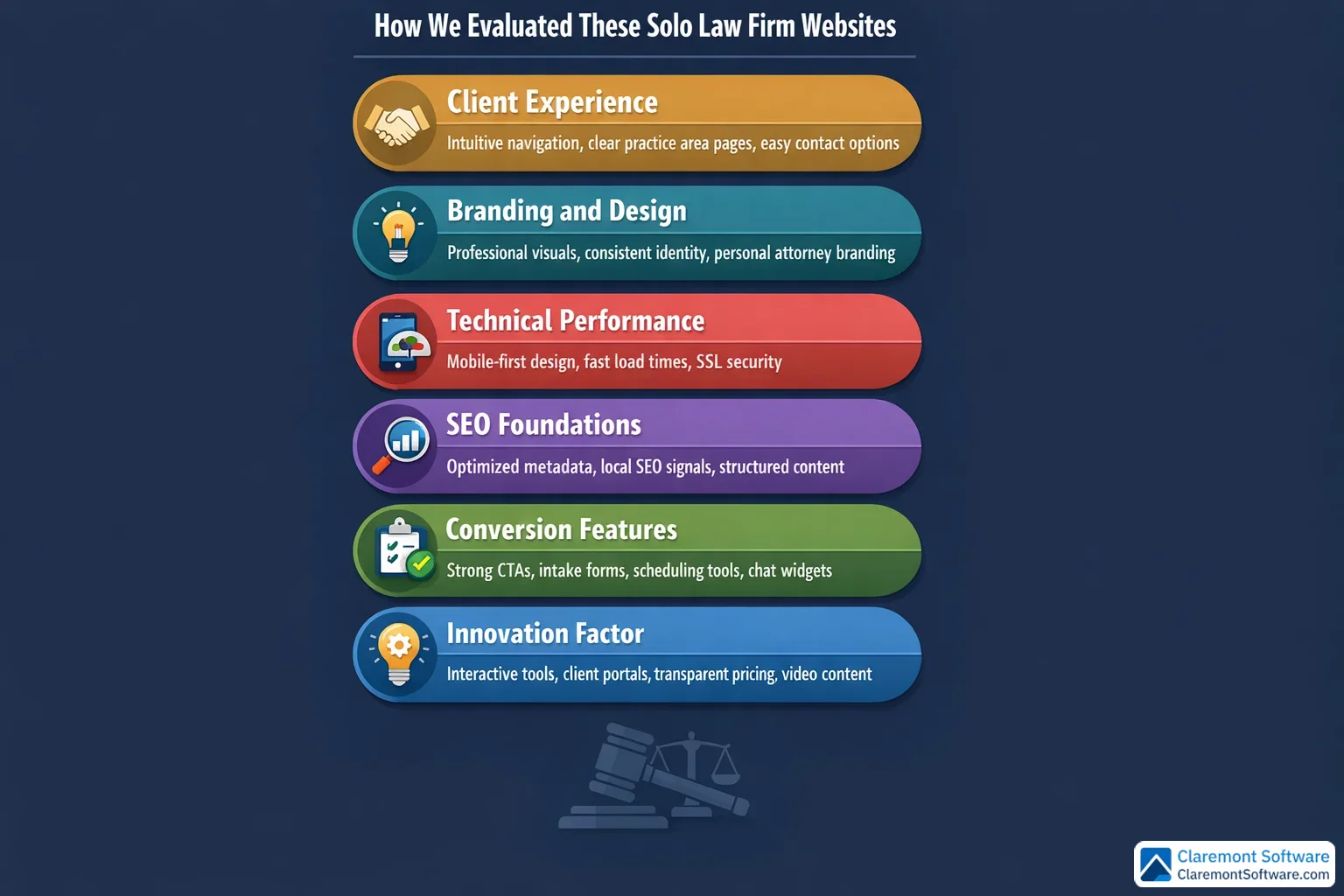
Not every law firm website deserves a spot on this list — and the bar for inclusion was deliberately high. Our evaluation framework draws on the same criteria used by leading legal industry analysts: client experience, branding clarity, and technical performance. Think of it as a three-legged stool — a site that excels in only one or two areas still wobbles.
From there, we weighted specific factors that directly influence whether a visitor becomes a client:
- Mobile responsiveness — does the site perform flawlessly on a smartphone?
- Page load speed — does it pass Core Web Vitals benchmarks?
- SEO fundamentals — is the site structured to be found by the right people?
- Clear calls to action — does every page guide visitors toward a next step?
- Conversion-oriented design — does the layout build trust and reduce friction?
We also awarded bonus points for innovation — interactive intake tools, client portals, transparent pricing pages, and self-service scheduling features that go beyond simply presenting information.
Crucially, every site profiled here belongs to a solo or small firm of one to two attorneys. The standard isn't "good for a small firm" — it's whether the site competes visually and functionally with firms ten times its size. These all do.
What Separates a Good Solo Law Firm Website from a Great One
After reviewing dozens of solo and small firm websites for this list, a clear dividing line emerged between the sites that simply exist online and the ones that actively generate clients.
Good solo law firm websites get the basics right. They load fast, work on mobile, organize practice areas logically, and look professional. But in 2026, those fundamentals are table stakes — not differentiators. Every template on Squarespace and WordPress can deliver that baseline.
The sites on this list go further in three specific ways. First, they lead with the attorney's personality rather than hiding behind corporate anonymity — you'll see intro videos, personal origin stories, and brand names that would never survive a committee. Second, they treat pricing and process as trust signals rather than secrets, publishing flat fees, subscription models, and transparent timelines that competitors leave to the phone call. Third, they reduce friction relentlessly — Clio Grow scheduling, embedded intake forms, client portals — so the path from "I need a lawyer" to "I have an appointment" takes minutes, not days.
According to Clio's Legal Trends Report, firms with optimized websites achieve up to 4x faster client acquisition growth. The 10 sites below show exactly what "optimized" looks like in practice.
10 Solo Law Firm Websites That Punch Above Their Weight
The ten sites profiled below were selected because each one teaches a distinct, transferable lesson — not because one is objectively better than another. Think of them less as a ranked list and more as a curated toolkit: every profile spotlights a specific design pattern or strategy that any solo practitioner can study and adapt.
Look for the patterns that match your clients, your market, and your goals — then steal them shamelessly.
1. The Brilliant Brawler (The Jones Firm, PLLC) — Oklahoma City, OK
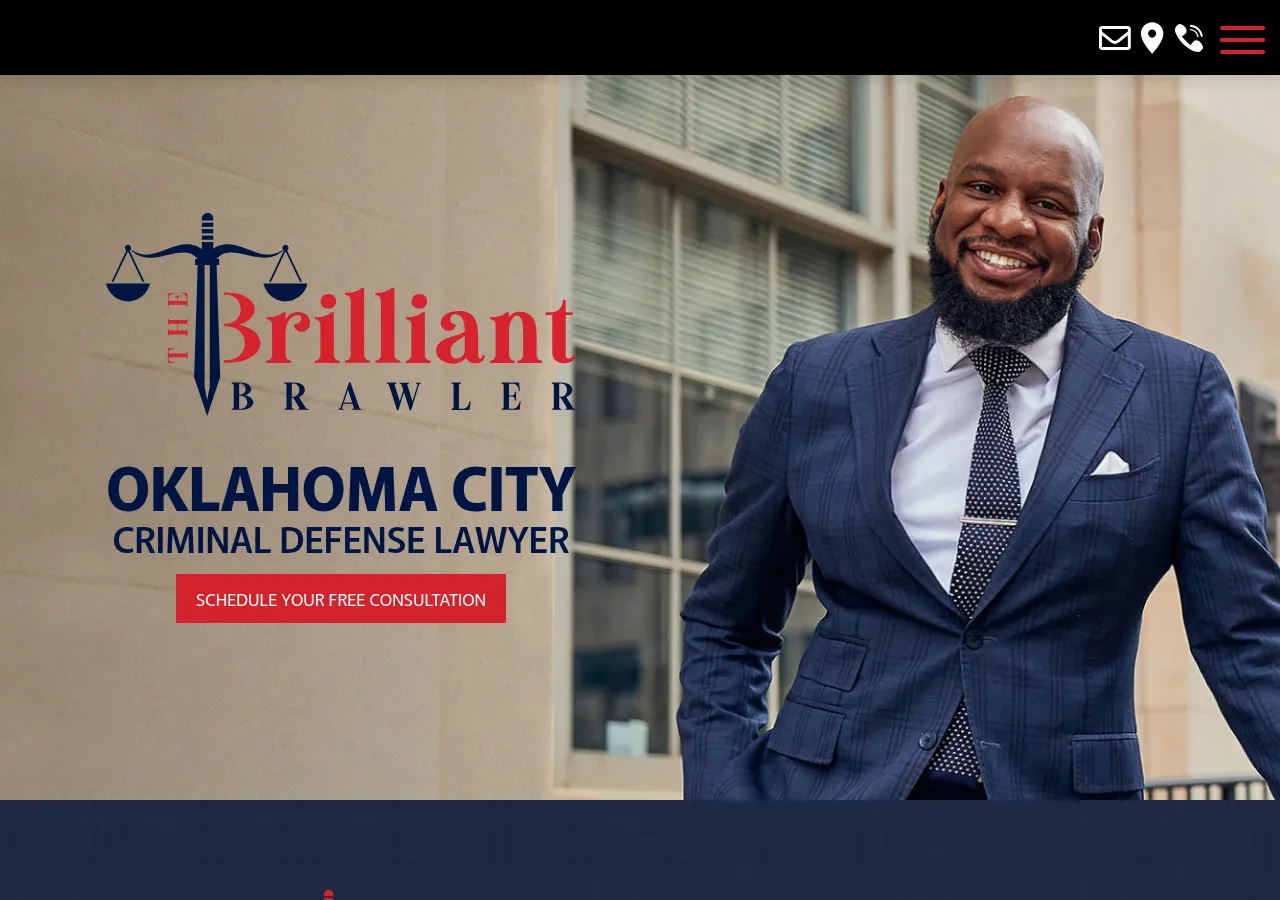
The Brilliant Brawler is the solo practice of attorney Ron Jones, handling criminal defense, civil rights, and police brutality cases in Oklahoma City. The site is built around a persona, not a firm name — a deliberate branding move that makes Jones instantly memorable in a practice area crowded with interchangeable "tough on crime" pitches.
What sets this solo attorney website apart is raw authenticity. Jones leads with his personal story of being arrested at 19, transforming what most attorneys would bury into the emotional anchor of his entire brand. An intro video on the homepage lets visitors hear his voice and see his energy before they ever pick up the phone. The effect is immediate: you feel like you already know this lawyer.
For solo practitioners in criminal defense — a practice area where trust and personal rapport are everything — this approach is a masterclass in using vulnerability as a competitive advantage.
What The Brilliant Brawler Gets Right
- The persona-driven brand name ("The Brilliant Brawler") is more memorable than any traditional firm name and works as a built-in marketing hook across social media and referrals
- The homepage intro video creates an immediate personal connection — visitors hear the attorney's voice and energy within seconds of landing
- The personal arrest story in the bio transforms a potential vulnerability into the strongest trust signal on the site, demonstrating genuine empathy for clients in similar situations
- Bold, high-contrast typography and a dark color scheme convey confidence and intensity that match the criminal defense practice area
What Could Be Improved
- The site could benefit from a more prominent above-the-fold call to action — the video and branding dominate, but a clear "Free Case Evaluation" button with a phone number would capture visitors ready to act immediately
- Adding structured practice area pages with FAQ schema for specific charges (DUI, assault, drug offenses) would improve long-tail search visibility in Oklahoma City
The Takeaway
If your personal story is your strongest differentiator, build the entire site around it — solo attorney websites that lead with authentic narrative create a connection that polished corporate sites cannot replicate.
2. Zafiro Law — Seattle, WA
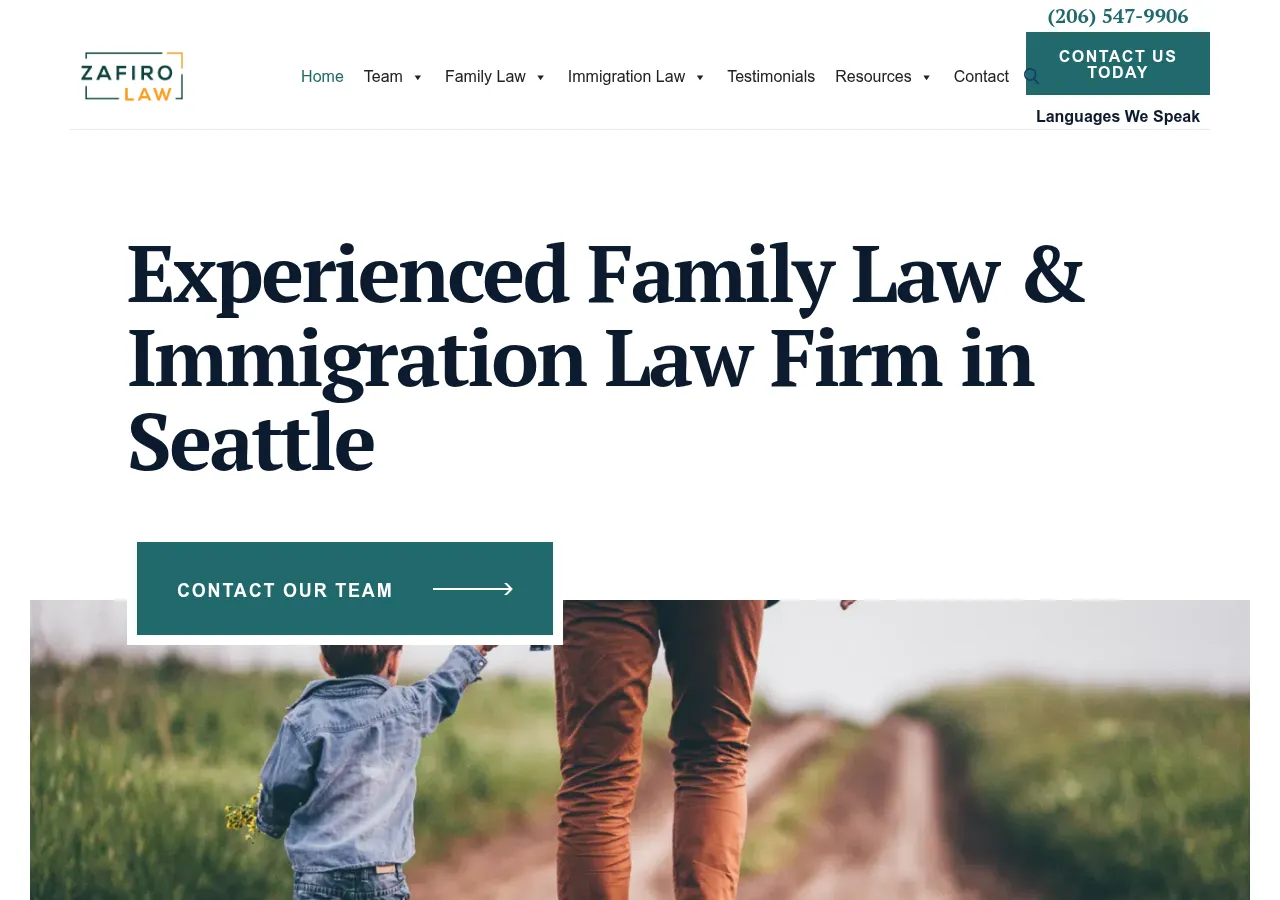
Zafiro Law is a solo immigration practice in Seattle focused on family-based immigration. The site immediately communicates that this firm serves immigrant families — and does so in a way that feels warm, welcoming, and culturally fluent rather than clinical or bureaucratic.
The standout move is how prominently languages spoken are displayed. For immigration clients — many of whom are navigating the U.S. legal system in a second language — seeing their native language listed front and center is an instant trust signal that no amount of polished copy can replicate. The warm family photography reinforces the message: this is a firm that understands the human stakes behind every petition.
When we tested Zafiro Law's site on mobile, the navigation was clean and the contact information was easy to find — critical for a client base that disproportionately browses on smartphones.
What Zafiro Law Gets Right
- Languages spoken are prominently displayed near the top of the page, immediately reducing the anxiety that non-English-speaking visitors feel when searching for legal help
- Warm, authentic family photography replaces the stock courtroom imagery that dominates most immigration firm sites, making the practice feel approachable and human
- The site's color palette and design language feel culturally thoughtful — not generic "law firm blue" but tones that convey warmth and trustworthiness
- Practice area content speaks directly to family immigration scenarios (spouse petitions, parent visas) rather than listing immigration law as a broad category
What Could Be Improved
- Adding a simple eligibility questionnaire or visa category guide would transform the site from informational to interactive, capturing leads while providing immediate value
- Client testimonials — especially video testimonials from families who successfully navigated the process — would strengthen the emotional connection the photography establishes
The Takeaway
When your clients come from communities where language access is a barrier, making multilingual capability visible from the first second builds trust faster than any design element.
3. The Anwari Law Firm, PC — Falls Church, VA
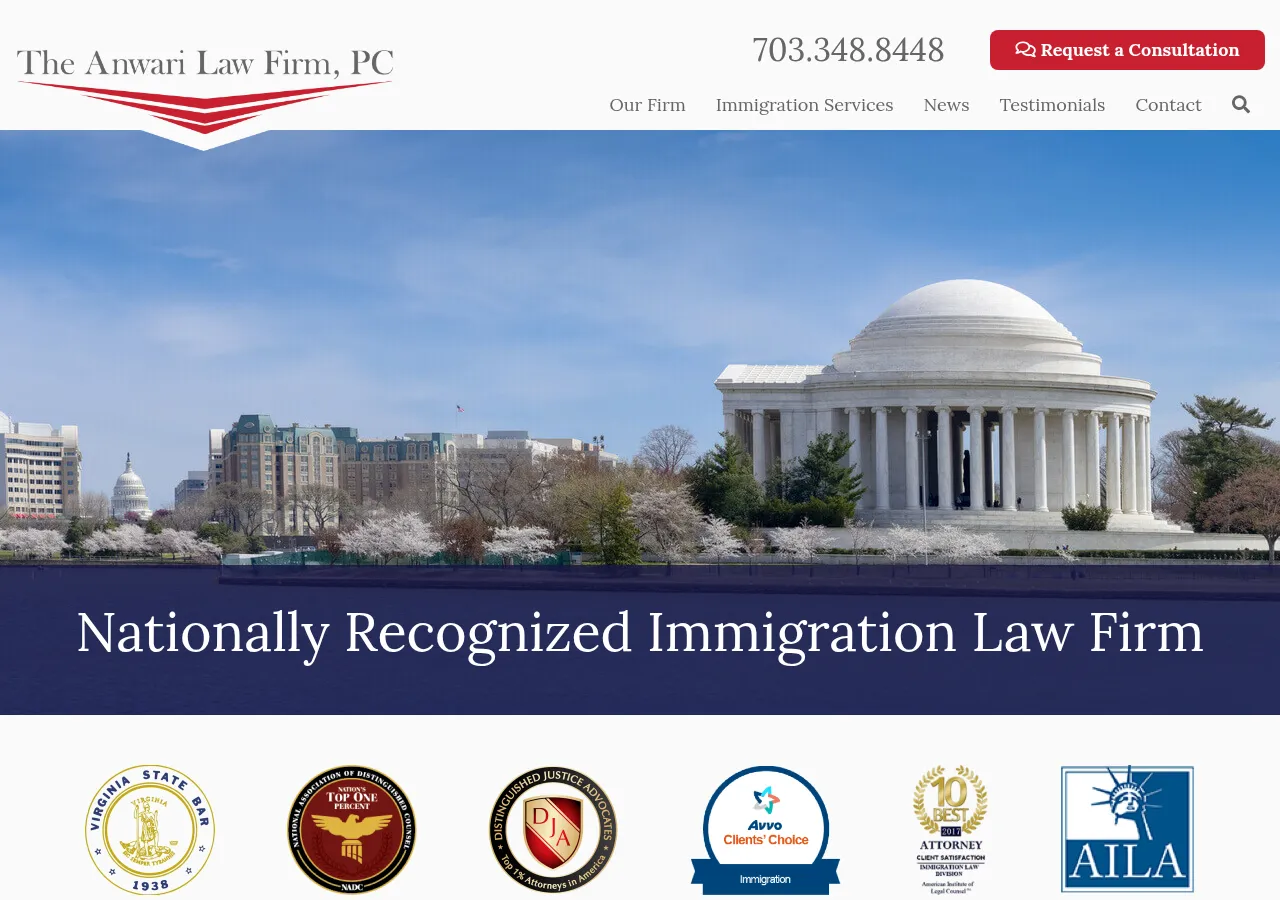
The Anwari Law Firm is the solo practice of Dee Anwari, handling family and employment-based immigration from the DC metro area. The site projects the credibility of a large DC firm while clearly communicating that clients work directly with a nationally recognized attorney — not a revolving door of associates.
Anwari's flat-fee billing model is prominently featured, addressing the cost anxiety that keeps many immigration clients from making initial contact. In a practice area where cases can drag on for years and hourly billing creates paralyzing uncertainty, publishing a flat-fee structure is both a trust signal and a conversion tool. The DC-area imagery throughout the site reinforces geographic authority — this is an attorney who knows the USCIS offices, the embassy procedures, and the local immigration court inside and out.
What The Anwari Law Firm Gets Right
- Flat-fee billing is highlighted rather than hidden, pre-qualifying price-sensitive visitors and reducing the "how much will this cost?" anxiety that blocks initial contact
- DC-area imagery and references to local immigration infrastructure establish geographic credibility without feeling forced
- The site clearly communicates that Dee Anwari is nationally recognized, weaving credentials into the narrative rather than presenting them as a disconnected awards list
- Clean, professional design that conveys the seriousness of immigration matters while remaining approachable to individual and family clients
What Could Be Improved
- The site would benefit from a dedicated "What to Expect" page walking prospective clients through the intake-to-resolution process — immigration cases are long, and managing expectations upfront reduces client anxiety and support volume
- Adding case processing timeline estimates by visa category would provide genuinely useful information that most immigration sites omit and would capture valuable long-tail search traffic
The Takeaway
Transparent pricing on a solo law firm website doesn't undercut your value — it signals confidence in your expertise and removes the single biggest barrier between a website visitor and a booked consultation.
4. The Law Office of Poorvi B. Parkhie — Denver, CO
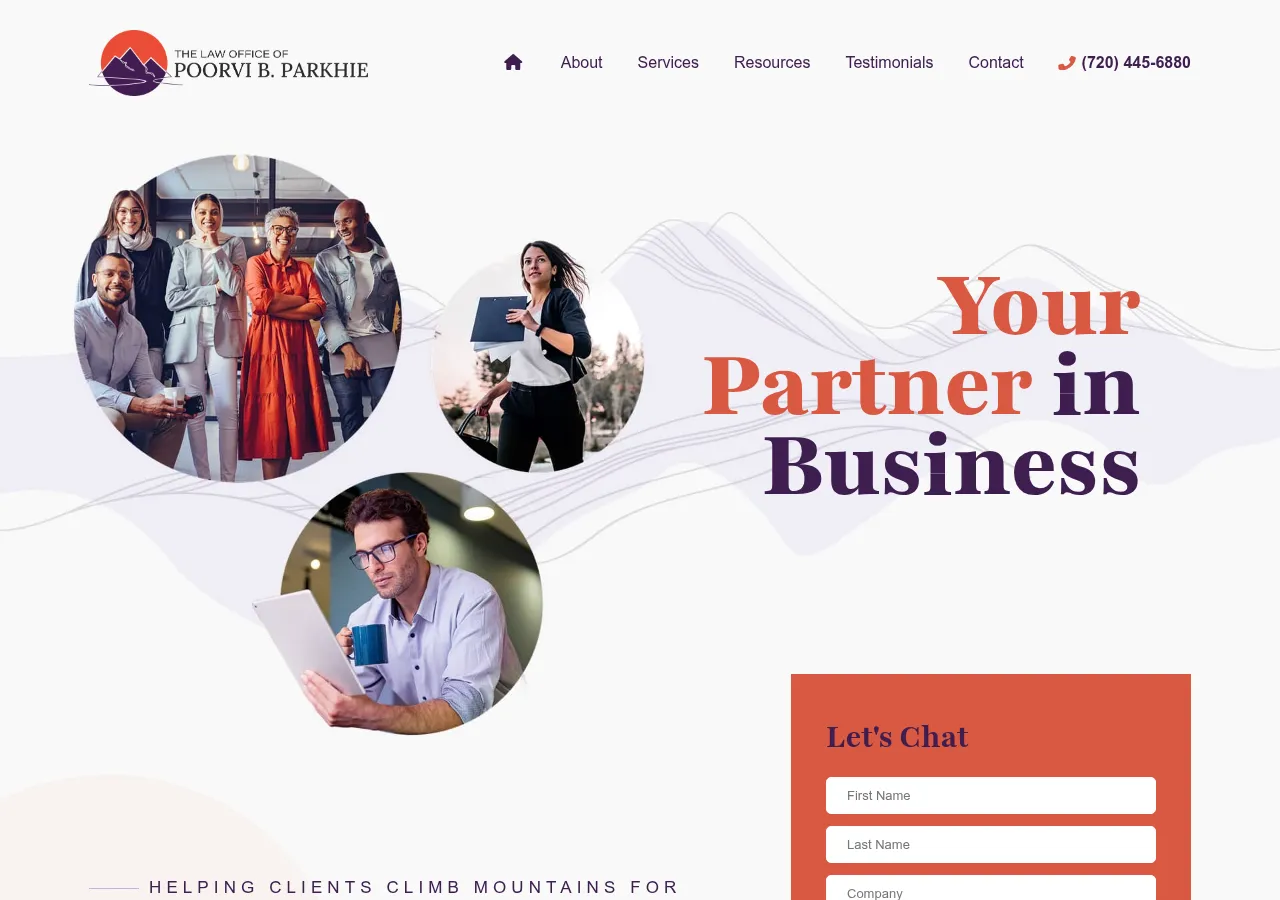
The Law Office of Poorvi B. Parkhie is a solo practice in Denver serving startups, small businesses, commercial real estate investors, and nonprofits. What makes this site notable among solo attorney websites is how clearly it positions Parkhie as an "outside general counsel" — a fractional legal partner rather than a transactional service provider.
That framing is strategically brilliant. Instead of competing with hundreds of Denver business attorneys on generic terms, Parkhie occupies a distinct niche: the attorney you keep on retainer without keeping on payroll. The site's content reinforces this at every turn, speaking the language of founders and business owners rather than legalese. Colorado mountain imagery in the background adds a subtle but effective local anchor.
For solo practitioners who serve business clients, this site demonstrates how to design a solo law firm website that positions you as a strategic partner rather than a commodity.
What Poorvi Parkhie Gets Right
- The "outside general counsel" positioning differentiates the practice from every other Denver business attorney and speaks directly to the startup founder's pain point of needing legal guidance without the cost of in-house counsel
- Content is written in business language, not legal language — founders and operators immediately see themselves in the copy
- Colorado mountain imagery creates a strong sense of place without overwhelming the content
- Practice areas are organized around client type (startups, nonprofits, real estate investors) rather than legal category, which mirrors how business clients actually think about their needs
What Could Be Improved
- A transparent retainer or engagement model breakdown would strengthen the "outside GC" value proposition — visitors who understand what fractional counsel costs are more likely to reach out
- Adding case studies or anonymized client success stories would provide the proof points that business clients look for before committing to a new professional relationship
The Takeaway
Positioning yourself as a fractional partner rather than a transactional attorney transforms how business clients perceive your value — and lets you compete on relationship, not rate.
5. SaaS Law — Southern California
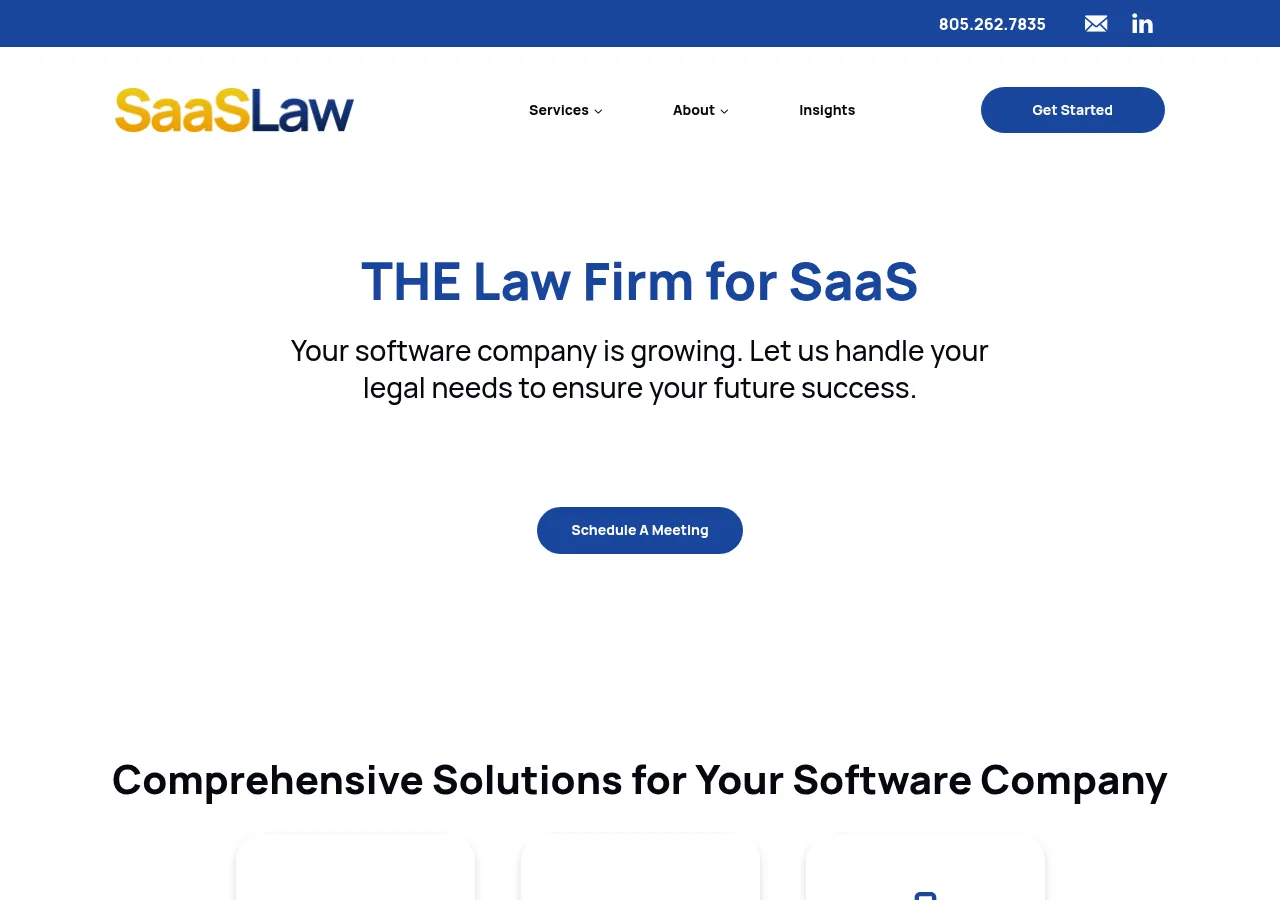
SaaS Law is the solo practice of Rob Congelliere, Esq., providing fractional general counsel services, commercial contract work, and AI-specific legal guidance to SaaS companies and tech startups. The site's .io domain is the first clue that this is not a typical law firm — and that's exactly the point.
Everything about SaaS Law's web presence is designed to feel like a tech product, not a legal practice. The copy, the layout, the visual language — it all speaks fluently to the SaaS founder audience. In a profession where most solo law firm websites look interchangeable, Congelliere's site stands out by refusing to look like a law firm at all. That's a strategy, not an oversight.
For solo attorneys serving tech clients, SaaS Law is proof that law firm website design inspiration doesn't have to come from other law firms.
What SaaS Law Gets Right
- The .io domain immediately signals tech fluency — SaaS founders recognize it as "one of us" before reading a single word of copy
- The site design borrows from SaaS product pages (clean typography, feature-benefit sections, product-style pricing) rather than traditional law firm templates
- Practice area descriptions reference specific SaaS scenarios (subscription agreements, data processing addenda, AI compliance) that demonstrate genuine domain expertise
- The overall positioning as "your startup's legal co-pilot" speaks directly to the fractional counsel model that cash-conscious startups prefer
What Could Be Improved
- Adding a resource section with downloadable contract templates or SaaS legal checklists would generate leads while establishing thought leadership in the niche
- Client logos or anonymized case studies from recognizable SaaS companies would add social proof that resonates specifically with the target audience
The Takeaway
Design your solo attorney website for your audience, not your profession — when your clients are tech founders, your site should feel like a product they'd use, not a firm they'd hire.
6. Dreifuss Law — Waukegan, IL
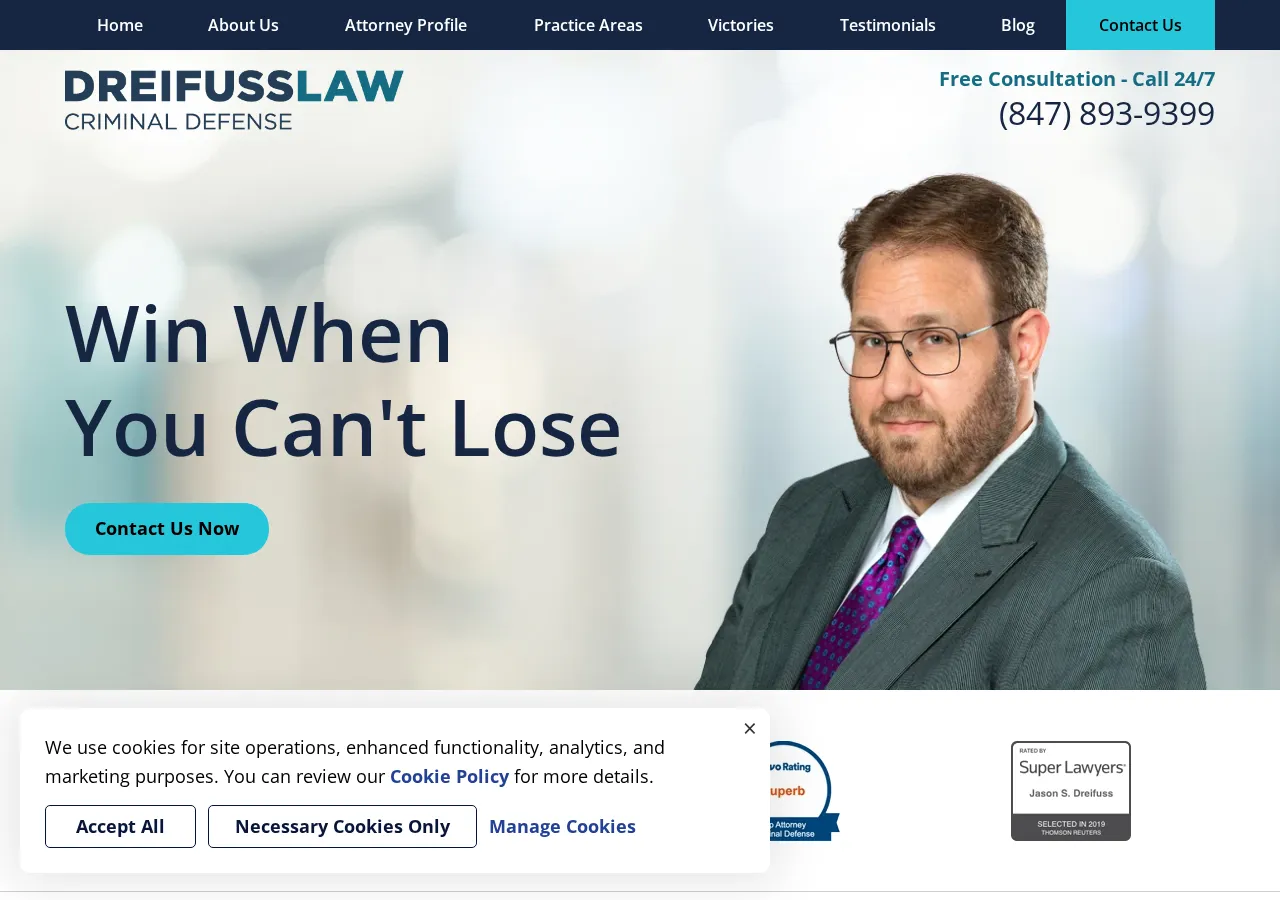
Dreifuss Law is the solo practice of Jason S. Dreifuss, handling criminal defense cases — homicide, drug crimes, sex offenses, gun charges, and DUI — in Lake County, Illinois. The site doesn't try to win on visual flash. It wins on technical execution, and the numbers are striking.
When we ran a Lighthouse audit on Dreifuss Law's homepage, it scored 99 for Performance, 100 for Accessibility, and 100 for Best Practices — numbers that most enterprise websites never achieve. The page weighs just 672KB total with a 14-millisecond server response time and zero cumulative layout shift. For a prospective client Googling "criminal defense attorney near me" at 2 a.m., that means the site loads almost instantly on any device, any connection.
Behind the speed is a clean technical foundation: proper heading hierarchy, compressed assets, minimal third-party scripts, and a lean HTML-to-content ratio that search engines can parse without wading through bloat. It's proof that a solo attorney website doesn't need heavy frameworks or expensive hosting to outperform competitors technically.
What Dreifuss Law Gets Right
- Near-perfect Lighthouse scores (99/100/100/92) — the fastest, most accessible, and most technically sound site on this entire list
- 672KB page weight and 14ms server response time mean the site loads near-instantly even on slow mobile connections — critical for criminal defense clients who are often searching in urgent, stressful situations
- Zero cumulative layout shift creates a stable reading experience where buttons and text don't jump around as the page renders
- Clean heading hierarchy (single H1, well-structured H2s) and proper schema markup make the site easy for search engines to understand and index
What Could Be Improved
- The blog section hasn't been updated since 2024 — reviving it with fresh content on Illinois criminal law changes would strengthen the site's topical authority and capture long-tail search traffic
- Adding Attorney or LegalService schema (beyond the existing WebPage and BreadcrumbList) would give search engines richer structured data about the practice and potentially earn enhanced search result features
The Takeaway
Technical SEO isn't glamorous, but a solo attorney website that loads in under a second with perfect accessibility scores has a structural advantage that no amount of design polish can replicate — speed and reliability win the client who's searching on a bad connection at 2 a.m.
7. Cary Estate Planning — Cary, NC
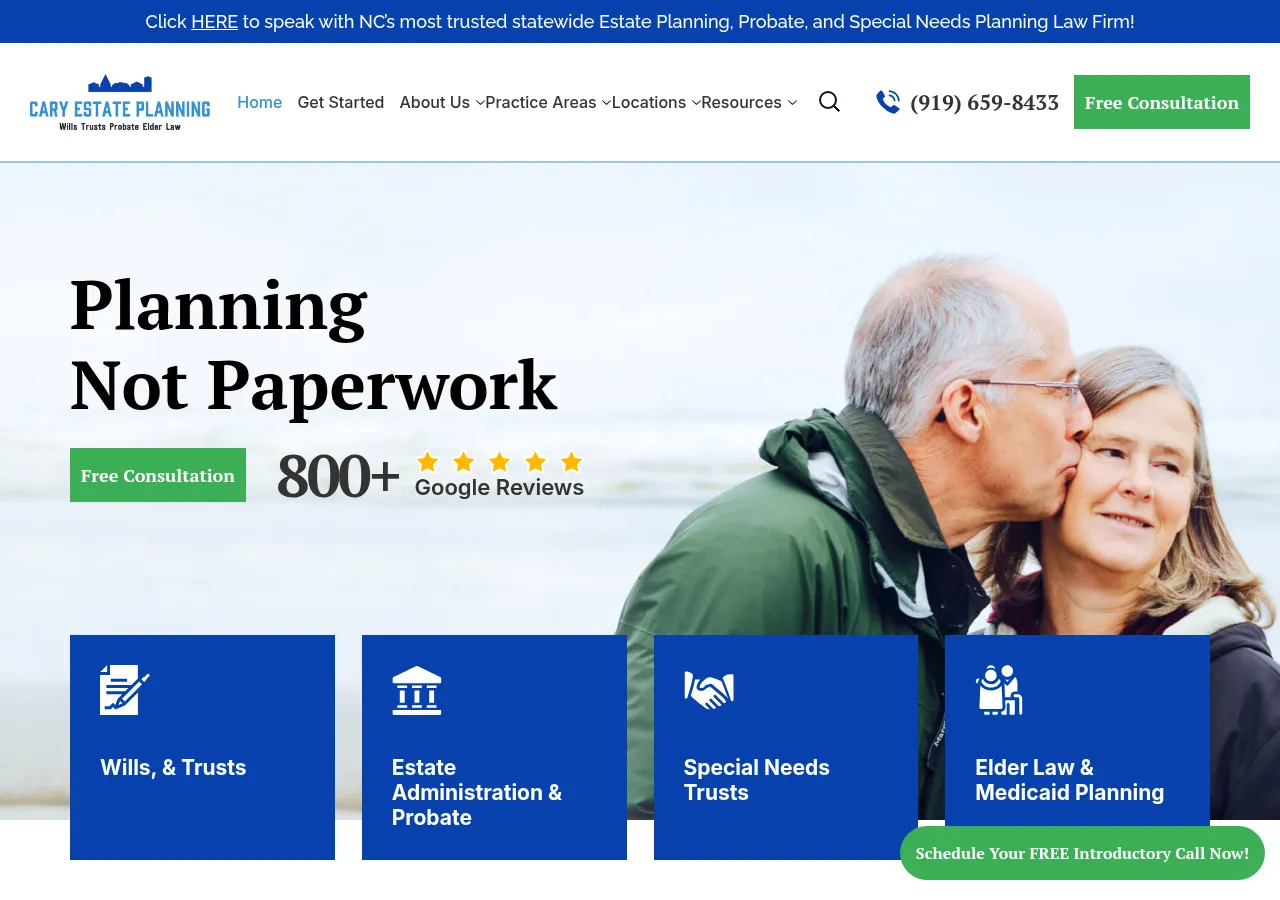
Cary Estate Planning is led by attorney Paul Yokabitus, handling estate planning, probate, elder law, special needs trusts, guardianship, and Medicaid planning in Cary, North Carolina. The firm's standout metric is staggering: over 800 Google reviews — a volume of social proof that most solo and small firms can only dream of.
But the reviews aren't the only thing working. Cary Estate Planning publishes transparent fixed-fee pricing for its core services, eliminating the cost uncertainty that keeps estate planning prospects on the fence. An online secure client vault gives existing clients a reason to keep engaging with the site long after their initial documents are signed, building the kind of ongoing relationship that generates referrals.
When we ran a Lighthouse audit on Cary Estate Planning's homepage, the technical fundamentals were solid — a sign that the firm understands that getting more website leads requires performance, not just content.
What Cary Estate Planning Gets Right
- 800+ Google reviews create an overwhelming social proof advantage — at this volume, the star rating carries weight that no competitor in the Cary market can quickly replicate
- Transparent fixed-fee pricing for estate planning packages directly addresses the cost question that keeps most prospects from reaching out, pre-qualifying leads before the first call
- The online secure client vault transforms the website from a one-time acquisition tool into an ongoing client relationship platform, naturally generating referrals and repeat business
- Practice area pages are specific and deep — separate pages for special needs trusts, Medicaid planning, and guardianship capture long-tail searches that general estate planning pages miss
What Could Be Improved
- With 800+ reviews, surfacing curated testimonials on practice area pages (matched by service type) would put the right social proof in front of the right visitor at the right moment
- A "Life Changes" content section addressing triggers like marriage, new baby, retirement, or diagnosis would capture visitors earlier in the decision journey, before they're actively searching for an estate planning attorney
The Takeaway
Building a review generation machine is a long game, but 800+ Google reviews create a moat that no competitor can cross overnight — pair that volume with transparent pricing and you've built a conversion engine.
8. Law Office of Stacey-Ann Taylor, LLC — Atlanta, GA
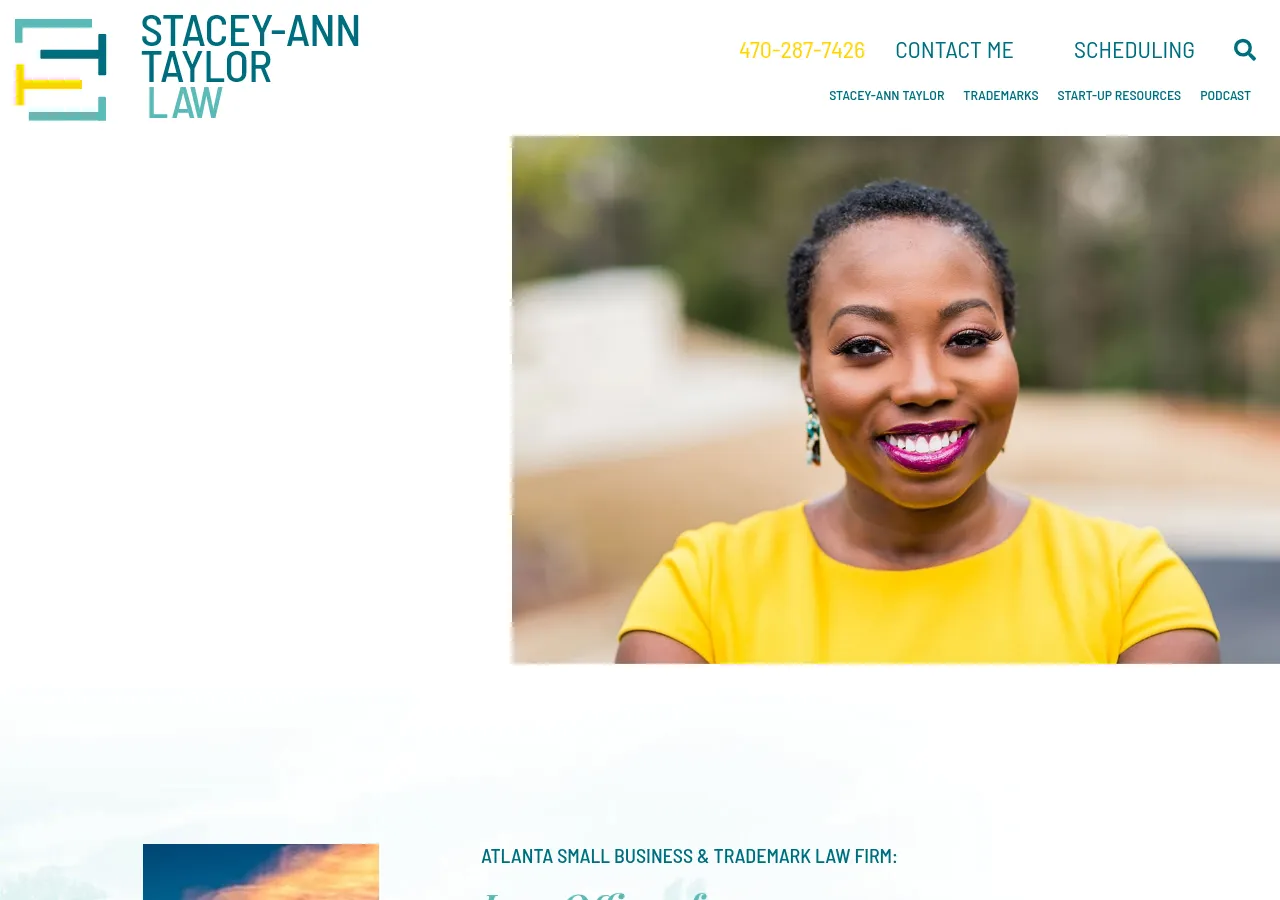
The Law Office of Stacey-Ann Taylor is a solo trademark and business law practice in Atlanta. The site is immediately distinctive — a bright, energetic PaperStreet Design build that stands out from the dark, heavy aesthetic most solo law firm websites default to.
The real innovation here is the business model the site promotes: a monthly subscription service for ongoing legal advice. In a profession that traditionally bills by the hour or by the project, Taylor offers entrepreneurs a predictable monthly cost for legal guidance — a model that mirrors the SaaS subscription approach her business clients already understand. The website communicates this clearly, positioning legal counsel as an affordable, ongoing resource rather than a large, intimidating one-time expense.
For solo attorneys exploring alternative billing models, this site demonstrates how to present them in a way that feels natural and client-friendly.
What Stacey-Ann Taylor Gets Right
- The monthly subscription legal service model is clearly communicated and positioned as a benefit to the client — "predictable legal costs" resonates with the entrepreneur audience
- Bright, bold design by PaperStreet breaks from the muted tones most law firm sites use, projecting the energy and approachability that small business clients look for
- Trademark law content is specific and actionable — the site explains what a trademark is, why it matters, and when to file, guiding visitors through the decision rather than just listing services
- The overall brand voice is warm and direct, avoiding the formal legalese that alienates solo practitioners' most common client base: small business owners
What Could Be Improved
- A comparison table showing subscription tiers versus hourly billing would help price-conscious visitors immediately understand the value proposition of the monthly model
- Adding a trademark search tutorial or "Is my business name trademarkable?" self-assessment tool would capture top-of-funnel visitors and demonstrate expertise before the first consultation
The Takeaway
If you're offering an alternative billing model, make it the hero of your homepage — clients can't choose what they don't know exists, and subscription legal services are still rare enough to be a genuine differentiator.
9. Amin Law, P.C. — San Francisco, CA
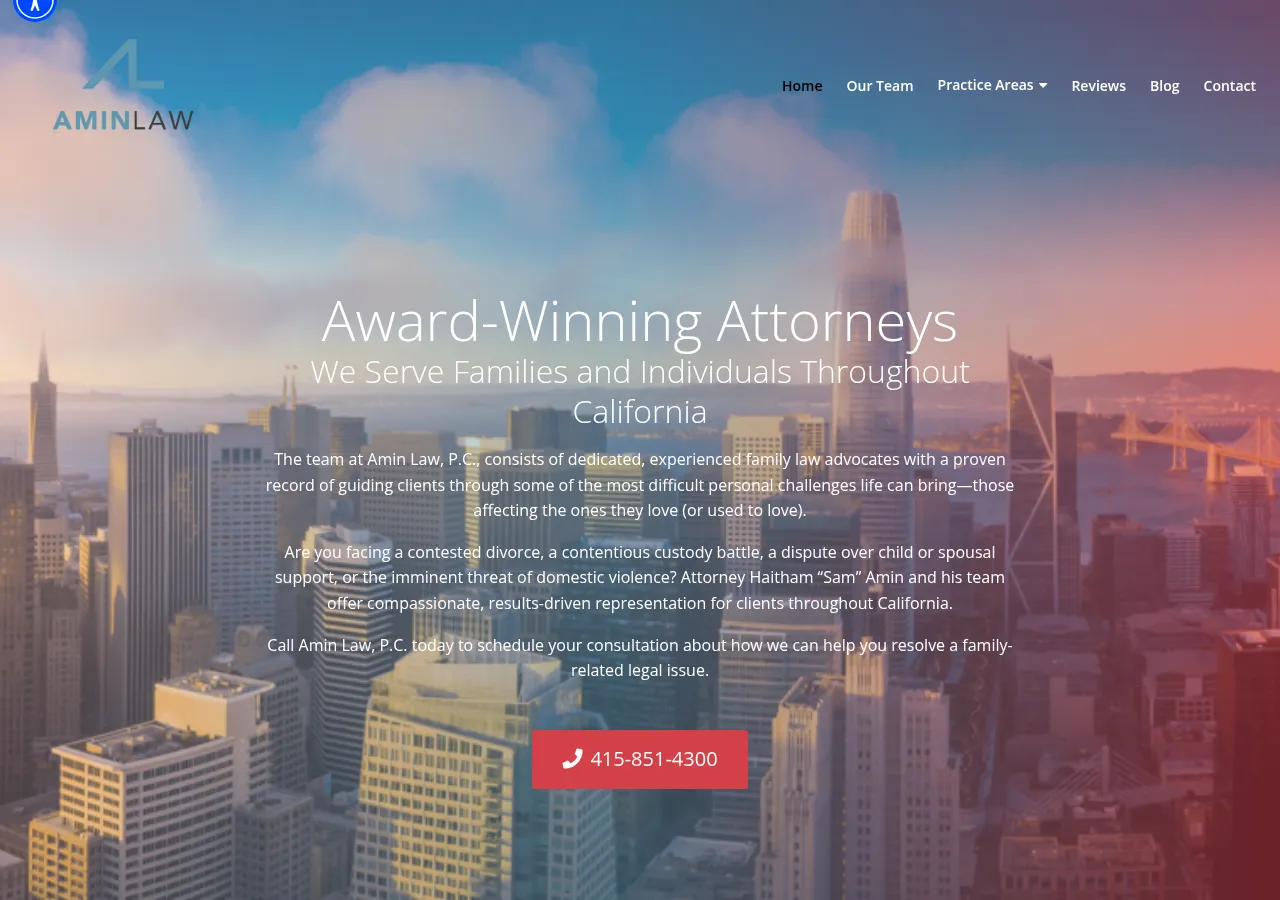
Amin Law is the solo family law practice of Haitham "Sam" Amin, handling divorce, child custody, spousal support, and property division in San Francisco and San Mateo. The site combines the visual credibility of a large Bay Area firm with the personal accessibility that only a solo practitioner can genuinely offer.
The standout feature is a comprehensive accessibility menu — a detail that most solo law firm websites overlook entirely. In a practice area where clients are often navigating one of the most stressful periods of their lives, making the site usable for visitors with visual, motor, or cognitive disabilities is both an ethical commitment and a practical differentiator. Super Lawyers recognition featured on the site adds third-party validation that reinforces the quality signal.
For solo attorneys in competitive metropolitan markets like San Francisco, Amin Law demonstrates that attention to law firm website design details — including accessibility — can set a small practice apart.
What Amin Law Gets Right
- The comprehensive accessibility menu goes beyond basic compliance, offering granular controls for text size, contrast, cursor style, and reading guides — signaling genuine care for all visitors
- Super Lawyers recognition is integrated into the design as a credibility badge rather than a separate awards page, keeping the trust signal visible during the decision-making window
- Practice area pages address specific family law scenarios (high-asset divorce, custody modifications) with enough depth to demonstrate expertise and capture intent-driven searches
- The dual San Francisco/San Mateo location targeting expands geographic reach without diluting the local authority signal
What Could Be Improved
- Adding a "Divorce Process Timeline" or "What to Expect" section would address the procedural anxiety that family law clients experience — they want to know what happens next, not just that you can help
- Client testimonials focused on the emotional support aspect of family law representation would resonate with visitors who are choosing an attorney based on empathy and communication style as much as legal skill
The Takeaway
Accessibility isn't just a compliance checkbox — for solo attorney websites serving clients in crisis, making the site usable for everyone communicates the same care and attention you bring to the attorney-client relationship.
10. James Newman, P.C. — Bronx, NY
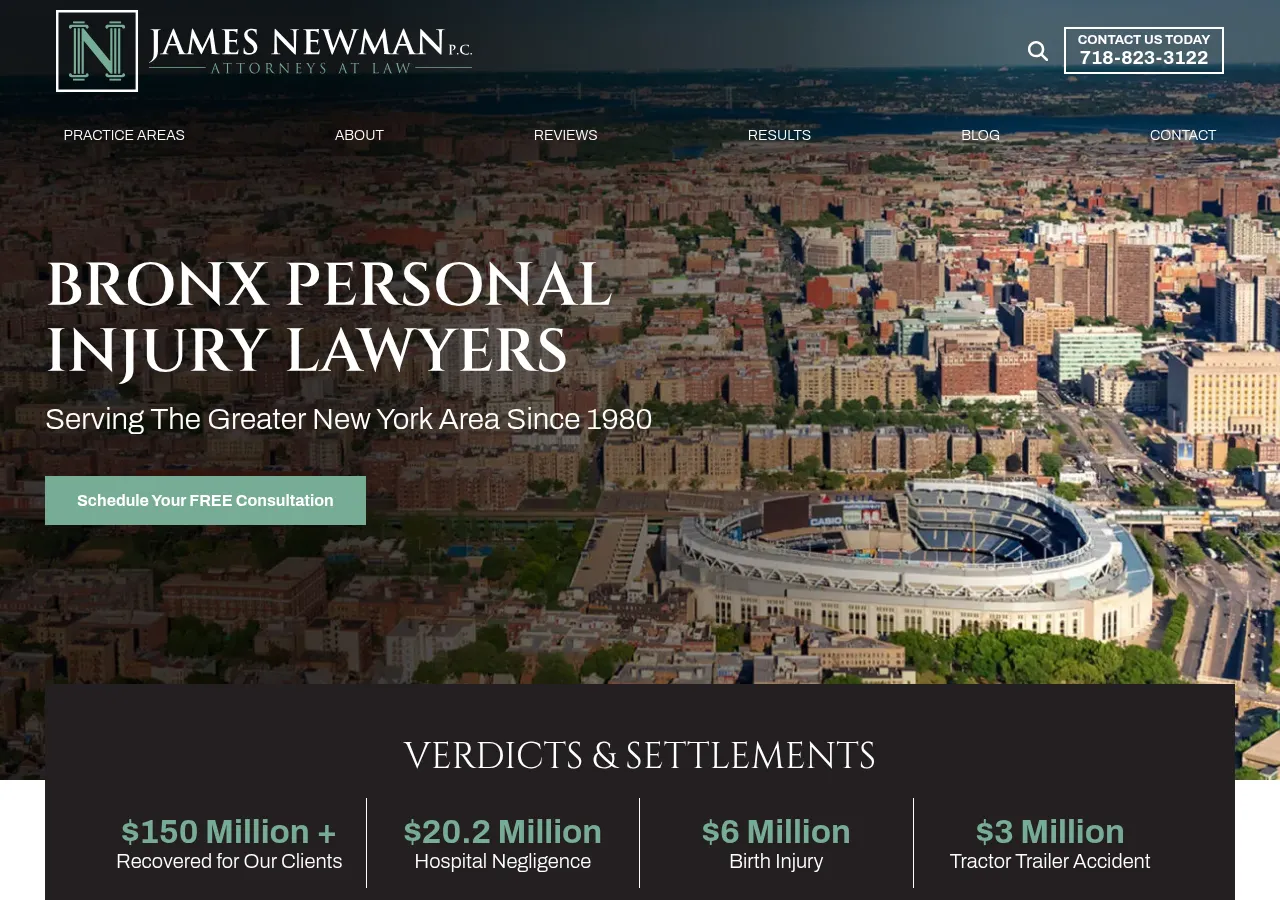
James Newman, P.C. is a family-owned personal injury firm in the Bronx, operated by James Newman, Esq. and his son Devin Newman, Esq. The firm has been serving the Bronx community since 1980, with over $150 million recovered for clients in auto accidents, construction accidents, medical malpractice, and wrongful death cases.
The father-and-son narrative is the site's secret weapon. In a practice area saturated with billboard advertising and aggressive marketing, James Newman, P.C. stands apart by leading with legacy and community roots. The "$150M+ recovered" figure isn't presented as a brag — it's positioned as evidence of four decades of consistent results. That kind of track record creates a trust signal that no amount of design polish can manufacture.
For solo and family-owned firms, this site proves that longevity and community connection are assets worth building an entire brand around.
What James Newman, P.C. Gets Right
- The father-and-son story creates a differentiated brand in the hyper-competitive personal injury space — "family-owned since 1980" communicates stability, values, and continuity that corporate firms cannot claim
- The $150M+ recovery figure is prominently displayed, giving visitors a concrete, verifiable proof point that immediately establishes credibility
- Bronx-specific content and community focus create strong local SEO signals and resonate with a client base that values neighborhood roots
- Case type pages (auto accidents, construction accidents, medical malpractice) are structured as standalone landing pages with specific scenarios and outcomes, capturing intent-driven searches
What Could Be Improved
- Adding a case results page with specific verdict and settlement amounts (anonymized as needed) would substantiate the $150M+ claim and give prospective clients a concrete sense of what outcomes to expect
- Video content featuring both James and Devin Newman would bring the father-and-son brand story to life more powerfully than text alone, especially on mobile where video engagement rates are highest
The Takeaway
When your firm has decades of history and a family story to tell, make that narrative the centerpiece — legacy and continuity are trust signals that newer competitors simply cannot replicate.
Key Design Patterns Across All 10 Sites

Look back across all 10 profiles and a handful of patterns emerge with striking consistency. These aren't coincidences — they're the building blocks that separate solo law firm websites that quietly generate clients from ones that simply exist online.
- Personal branding over corporate anonymity — every firm on this list leads with a real person, a real story, or a distinctive brand voice. None of them could be mistaken for a generic template.
- Niche positioning that repels as much as it attracts — from SaaS contracts to Bronx construction accidents, these sites serve a specific audience and aren't afraid to ignore everyone else.
- Transparent pricing or billing models — flat fees, subscription services, and published rate ranges appear across multiple entries. The firms willing to answer the money question upfront are the ones earning inquiries.
- Local authority signals woven throughout — not just a footer address, but community imagery, local court references, and geo-specific content that search engines and human visitors both reward.
- Clear, repeated calls to action — every page earns its place by moving visitors toward a next step. Scheduling integrations (Clio Grow, Calendly) replace "call us" with "book now."
- Mobile-first execution — clean navigation, tap-to-call buttons, and fast load times on cellular connections. These aren't afterthoughts; they're design priorities.
- Social proof at decision points — Google reviews, Super Lawyers badges, recovery amounts, and client testimonials appear where visitors are weighing their options, not buried on a separate page.
For a deeper dive into each of these patterns — with implementation guidance, cost breakdowns, and technical checklists — see our complete solo law firm website design guide.
The encouraging reality is that none of this requires a massive budget. The design tool matters far less than the thinking that drives it. And for solo practitioners ready to invest in a site that actually works, law firm web design specialists who understand legal marketing can accelerate the process significantly.
Ready to Build Your Solo Law Firm Website?
Every site on this list proves you don't need a massive budget to look credible online. What you need is a clear strategy, authentic positioning, and a website built to convert — not just to exist.
If you're ready to invest in a solo attorney website that works as hard as you do, see our solo law firm website design services or explore our full law firm website design offering. We build sites for solo and small firms that compete with practices ten times their size.
Frequently Asked Questions
How much does a solo law firm website cost to build and maintain?
The cost of a solo law firm website depends on how much customization you need. The DIY route using website builders with legal templates runs roughly $35–$100/month — a solid option for tech-comfortable attorneys. A mid-range custom site built by a freelancer or small agency typically costs $2,000–$5,000 upfront. A fully custom site from a law-firm-specific web design agency — including SEO, content strategy, and ongoing support — can run $5,000–$15,000 or more. Beyond build costs, budget for hosting, domain renewal, SSL certificates, and regular content updates. The ROI perspective matters here: firms with optimized websites report up to 4x faster client growth, meaning even a few additional clients per year can cover the entire investment.
What is the best website builder for solo attorneys in 2026?
For solo attorneys who want a reliable, professional-looking site without heavy technical overhead, Squarespace is a popular choice at around $35/month, offering built-in stability, clean design templates, and solid functionality out of the box. WordPress remains the gold standard for flexibility and SEO control, especially when paired with a legal-specific theme — though it requires more hands-on management. The 'best' builder ultimately depends on your comfort with technology, your budget, and how much customization you need. If you plan to invest heavily in content marketing and SEO, WordPress gives you more room to grow. If you want something polished and low-maintenance, a premium website builder is a smart starting point.
How can a solo law firm website compete with larger firms online?
Solo attorneys can absolutely compete with larger firms online — and in many cases, win. The key is to lean into what big firms can't replicate: personal branding, authentic local roots, and genuine client relationships. Strategically, this means targeting long-tail, intent-driven keywords that large firms overlook, building deeply detailed practice area pages that answer real client questions, and optimizing your Google Business Profile for local search visibility. Publishing consistent, helpful content — guides, FAQs, legal explainers — positions you as a trusted authority without requiring a massive marketing budget. Add strong social proof through client testimonials and case results, and a seamless mobile experience, and a solo firm's website can outperform firms with far greater resources.
What pages should every solo law firm website include?
At minimum, every solo law firm website should include a compelling homepage with a clear call to action, individual practice area pages for each service you offer, an attorney bio page that tells your story and builds personal connection, a contact page with multiple ways to reach you, and a client testimonials or results page. Beyond the essentials, high-performing solo firm sites also include a blog or resource library for SEO and thought leadership, a transparent pricing or FAQ page to reduce friction, and an online intake or scheduling tool to streamline the client journey. Each page should serve a specific purpose — informing, building trust, or driving a conversion — rather than simply filling space.
How important is SEO for a solo attorney's website?
SEO is one of the highest-leverage investments a solo attorney can make online. Because solo practitioners typically have less name recognition than established firms, appearing in search results for the specific queries potential clients are typing is critical. Local SEO — including an optimized Google Business Profile and location-specific keywords — helps solo firms dominate their geographic market. On-page SEO fundamentals like fast page speed, mobile responsiveness, proper heading structure, and schema markup (Attorney, LegalService, LocalBusiness) help search engines understand and surface your content. A solo attorney who publishes consistent, helpful content answering real client questions can outrank firms with far larger marketing budgets over time. SEO is not optional — it's the engine behind sustainable client acquisition.
Should solo attorneys hire a professional web designer or build their own website?
It depends on your budget, technical comfort level, and growth goals. Building your own site using a website builder is a viable starting point — modern platforms make it possible to create a professional-looking site for $35–$100/month without coding skills. However, if your website is a primary client acquisition channel (and for most solo attorneys, it should be), investing in a professional designer pays dividends. Law-firm-specific web design specialists bring expertise in legal branding, conversion optimization, and SEO that general designers may lack. A professionally built site also frees you to focus on practicing law rather than troubleshooting plugins. As a middle ground, some attorneys build their own site initially and bring in a professional for a redesign once revenue supports it.
How often should a solo law firm update its website content?
Your website should be treated as a living marketing asset, not a one-time project. At a minimum, aim to publish new blog posts or legal guides at least twice a month to support SEO and demonstrate that your practice is active and current. Practice area pages should be reviewed and refreshed at least once or twice a year to reflect changes in the law, your services, or your target audience. Client testimonials and case results should be added on an ongoing basis as you accumulate them. Technical maintenance — checking for broken links, updating plugins, and monitoring page speed — should happen monthly. Consistent updates signal to both search engines and prospective clients that your firm is engaged, credible, and current.
What are the most important conversion features for a solo law firm website?
The highest-impact conversion features for a solo law firm website are: a clear, prominent call to action on every page (such as 'Schedule a Free Consultation'); a hero section that immediately communicates who you serve and what you do; click-to-call functionality for mobile users; an online scheduling tool that lets prospects book without picking up the phone; and a streamlined intake form that captures lead information efficiently. Beyond these fundamentals, features like client testimonials and case results build trust before the first conversation, while transparent pricing or fee ranges reduce hesitation. Interactive tools — such as eligibility checkers or cost estimators — increase engagement and naturally capture contact information. Together, these features turn passive visitors into active leads.