Discover key elements that make law firm websites stand out—professional design, trust-building, SEO, fast loading, and innovative tools—to turn visitors into clients and maximize your firm's online potential.
Your Digital Handshake: Why Your Law Firm's Website Matters

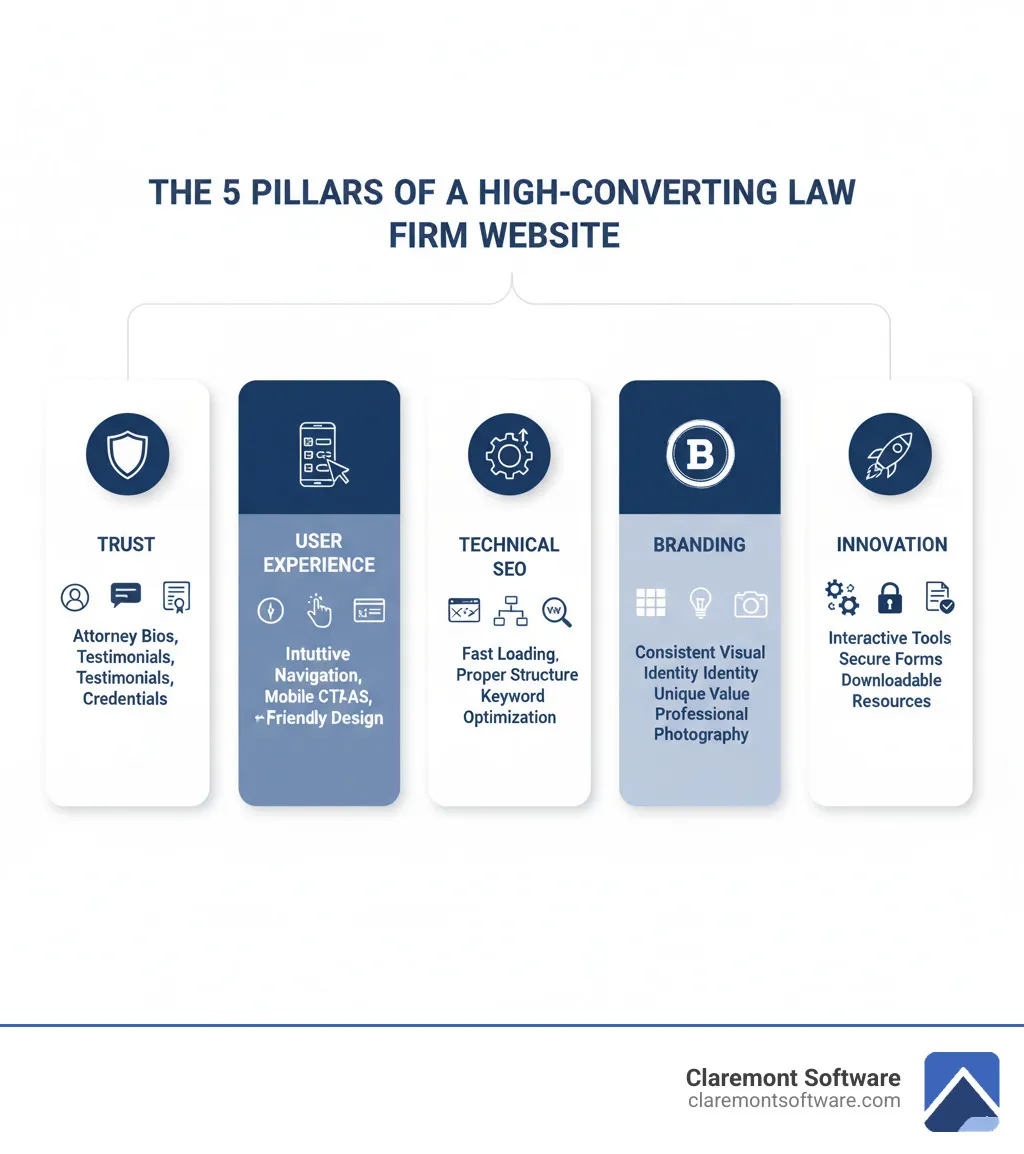
Law firm websites serve as the digital front door to your practice, and it's often the first impression a potential client has. What was considered a "good" website just a few years ago is now simply the baseline. The best ones include:
- Professional Design & Branding - Clean, modern layouts that establish trust.
- Mobile-Friendly Experience - Seamless functionality on all devices.
- Clear Calls-to-Action - Easy contact forms and consultation requests.
- Fast Loading Speed - Under 2 seconds to keep visitors engaged.
- SEO Optimization - Content that helps potential clients find you on Google.
- Trust Signals - Attorney bios, testimonials, and credentials.
The difference between a good website and a great one lies in client experience, strong branding, and technical execution. A great website actively helps visitors, builds trust before the first call, and turns browsers into potential clients.
Having built hundreds of websites for lawyers since 1998, I've seen that firms investing in strategic, client-focused sites consistently see measurable ROI through better lead generation. The legal industry is more competitive online than ever. Your competitors are investing in their digital presence, and an outdated website will cost you clients who are searching for legal help right now.
The Foundation: Essential Elements of a Good Law Firm Website
Think of your website as your firm's digital reception area. Does it inspire confidence and immediately show how you can help? A good law firm website in 2025 is a functional tool that guides visitors, answers questions, and makes it easy to take the next step. It must be professional enough to inspire confidence but approachable enough for stressed clients.
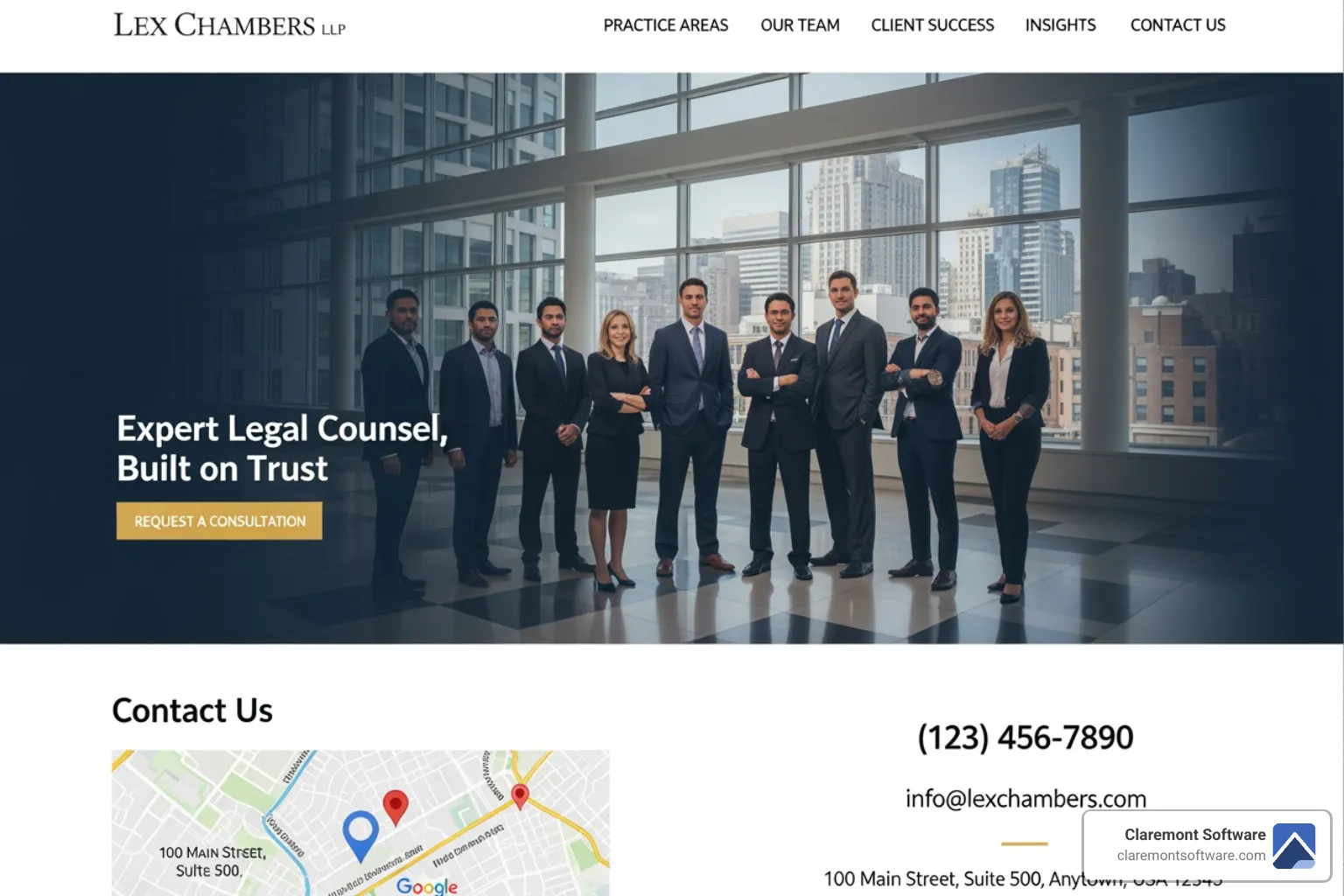
- Professional design means a clean, modern layout that communicates competence without distracting animations.
- Clear branding ensures your firm's unique identity comes through immediately, building recognition and trust.
- Intuitive navigation is critical. Visitors are often stressed; they need to find information without frustration. Our article on Business Website Layout covers these fundamentals.
- Mobile-responsiveness is non-negotiable, as many clients search for legal help on their phones.
- Attorney bios humanize your practice by balancing professional credentials with personal touches.
- Practice area pages should explain your services in plain language and demonstrate expertise without legal jargon.
- Clear contact information (phone, email, address) should be visible on every page.
- Calls-to-action (CTAs) like "Schedule a Consultation" guide visitors on what to do next.
- Client testimonials provide social proof, reducing anxiety for potential clients.
Core Pages Every Law Firm Needs
- Homepage: Your digital storefront. It must quickly communicate who you serve, what you do, and why to choose you.
- About Us page: Tell your firm's story, mission, and values to connect on a human level.
- Practice area details: Dedicated pages for each service, explaining your approach and how you help clients.
- Attorney profiles: Showcase qualifications, experience, and expertise with professional headshots and brief personal details.
- Blog or resources section: Demonstrates expertise and improves search visibility by answering common legal questions.
- Contact us page: Make reaching out effortless with your address, phone, email, an embedded map, and a simple contact form.
Building Initial Trust and Authority
Trust is everything in legal services. Your website must build credibility instantly.
- Professional headshots are visual proof of the real, competent professionals behind your firm.
- Awards and recognitions provide external validation of your expertise from bar associations or industry rankings.
- Social proof via client testimonials is incredibly persuasive. Specific details are more effective than generic praise.
- Clear, jargon-free copy respects your visitors. Write as if you're explaining things to a friend—knowledgeable but accessible.
- Stating your firm's mission and values helps the right clients find you and creates a deeper connection.
From Good to Great: Elevating Your Online Presence
A merely "good" website won't cut it in today's competitive legal market. The sites that stand out put clients first, offering interactive experiences that go beyond static information.
Imagine your potential client: stressed, confused, and searching for answers late at night. A great website doesn't just tell them what you do—it helps them in that moment. This is where user experience (UX) becomes everything. As the Lawyerist article "Good vs. Great" notes, the best sites "push the envelope of what a digital legal experience can be."
A good site has basic practice area pages; a great one offers interactive FAQs and detailed case studies. A good site has a simple contact form; a great one provides online consultation scheduling and secure intake forms. The difference is about serving clients better through strategic design.
| Good Website Feature | Great Website Feature |
|---|---|
| Static practice area pages | Interactive FAQs, detailed resource libraries, case studies with outcomes |
| Basic contact form | Online consultation scheduling, secure intake forms, client portal for document sharing |
| Text-heavy bios | Attorney video introductions, podcasts, client success stories integrated into profiles |
| General blog posts | Downloadable guides (e.g., "What to Do After an Accident"), checklists, interactive legal calculators |
| Limited client interaction | Live chat support, virtual assistants, online payment options |
| Simple navigation | Personalized content suggestions, guided legal issue pathways, clear calls-to-action for every stage of the client journey |
Key Branding Elements for the Best Law Firm Websites
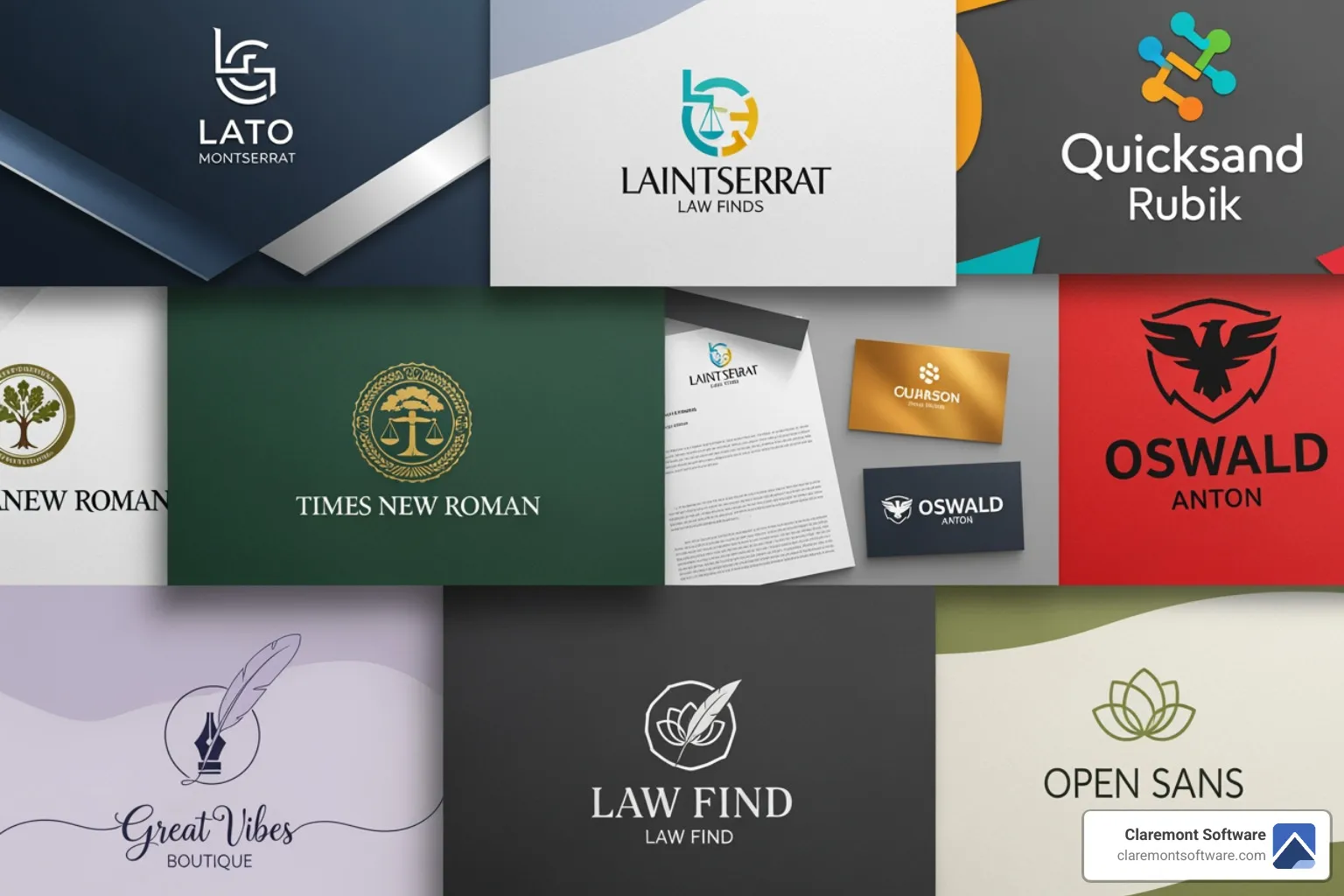
Your brand is the feeling someone gets from your website and the reason they call you. The best law firm website designs use branding to create an immediate, memorable connection.
- Unique value proposition: A clear answer to "why choose you?" needs to be front and center. Whether you're a niche firm like Bick Law LLP or focus on a specific audience like ESQGO, your differentiator is key.
- Consistent visual identity: Using the same color palette, typography, and imagery style across your site, like Stacey-Ann Taylor Law does, feels professional and trustworthy.
- Storytelling: Share narratives that resonate. Bend Law Group does this with personal videos and statements like "Dream Big. We got your back." YLaw uses unique imagery to showcase their high level of experience.
- High-quality custom photography: Skip generic stock photos. Use authentic images of your team and office. Bick Law's memorable rhinoceros image is a great example of brand-aligned creativity.
If your branding feels stale, our Website Redesign Services can help you develop a visual identity that attracts the right clients. For real-world examples of bold law firm branding, see how 20 firms broke the mold with distinctive visual identities.
Innovative Features on Top Law Firm Websites
Innovation means making things easier for clients and more efficient for your practice. The top sites use features that turn passive visitors into engaged clients.
- Online contact and consultation request forms help you qualify leads by gathering specific details about their legal issue upfront.
- Secure document upload offers clients a convenient and safe way to share sensitive information, often integrated into a client portal.
- Interactive tools like filterable FAQs (used by Tremain Artaza PLLC) or resource libraries (offered by Modern Law) position your firm as an authority. Calculators, like the one on Fight4Vets, can also be incredibly useful.
- Downloadable resources (guides, checklists) provide value while capturing leads who may not be ready to call.
- Live chat functionality provides immediate support, reducing the delay between a visitor's question and your response.
- Custom intake forms and workflow automation are cutting-edge. These forms gather relevant information and can trigger automated follow-ups, improving efficiency and the client experience from the first touchpoint.
Critical Technical Execution for Law Firm Websites
The most beautiful website is worthless if it's slow, hard to find on Google, or crashes on mobile. The technical foundation of your site is like the plumbing in a house: nobody notices when it works, but when it breaks, everything falls apart. Technical excellence is a baseline requirement for any firm that wants to compete online.
A technically sound website improves user experience, boosts search rankings, and protects your firm and clients. For example, Wagner, McLaughlin & Whittemore's site is optimized for long-tail keyword searches, so they appear when someone asks a specific question like "What should I do after a car accident in my state?" That's strategic execution, not luck.
Every website we build is universally compatible and includes native SSL security to encrypt data and protect client information. That padlock icon tells visitors and search engines your site is safe. Learn more in our post on Mobile-First Design: Why Local Businesses Can't Ignore It.
Optimizing for Speed and Performance
If your website takes more than two seconds to load, you are losing clients. Online patience is nearly nonexistent, especially for someone facing an urgent legal issue. Pages loading in under 2 seconds keep users engaged; loading in 2.9 seconds is faster than about 94% of the web.
You can test your site's speed for free. Common culprits for slow speeds are large images, inefficient code, and too many external scripts. We approach speed systematically with image optimization (compressing files without losing quality) and caching mechanisms (storing parts of your site for faster re-loading). Every millisecond counts.
Ensuring Accessibility and SEO Success
Can someone with a disability easily use your website? If not, you're excluding potential clients and may be violating ADA compliance requirements. Accessibility means using proper color contrast, enabling keyboard navigation, and adding descriptive alt-text for images so screen readers can interpret them. You can use tools to check for accessibility issues and ensure your site works for everyone.
Beyond accessibility, robust SEO (Search Engine Optimization) determines if clients can find you. This isn't black magic; it's a set of best practices.
- On-page SEO basics involve optimizing titles, descriptions, and content with keywords potential clients use.
- Local SEO for law firms is critical. Optimizing your Google Business Profile and stating your service areas helps you appear in "near me" searches.
- Keyword-rich content, like the strategy used by Testa Law Firm, helps search engines understand your expertise. This means publishing useful articles that answer the questions your clients are asking.
Avoid common pitfalls by reading our article on 5 Common SEO Mistakes Local Businesses Make (And How to Fix Them). A solid technical foundation turns your website into a 24/7 marketing asset.
Frequently Asked Questions about Law Firm Websites
After building law firm websites for over two decades, I've found that the same questions come up in nearly every conversation. Let's tackle the big ones.
How much should a new law firm website cost?
This is the most common question. Website costs can range from a few thousand dollars to over $50,000, depending on your needs. Key factors include:
- Template vs. custom design: Templates are more affordable, while fully custom sites require more expertise.
- Number of pages: A five-page site costs less than one with dozens of detailed pages.
- Functionality: Advanced features like custom intake forms or interactive tools add to the cost.
- Content creation: Professional copywriting, photography, and video production are additional services.
- Ongoing maintenance: A website requires consistent attention for security and performance.
Crucially, view your website as an investment, not an expense. The goal is ROI (Return on Investment). A well-executed site that generates leads quickly pays for itself. We explore this in our article, How Much Should a Small Business Website Cost in 2025?.
How can my website generate more client leads?
You want your website to bring in clients, not just sit online. Lead generation requires a strategic approach where several elements work together:
- Content marketing: Regularly publish helpful articles and resources that answer your clients' legal questions to attract organic traffic.
- SEO strategy: Use keyword research, on-page optimization, and local SEO to ensure your content gets found by search engines.
- Conversion rate optimization (CRO): Analyze user behavior and test different approaches to turn more visitors into leads.
- Clear calls-to-action: Use prominent buttons and compelling language like "Schedule Your Free Consultation" to guide visitors.
- Offering valuable content: A downloadable guide or checklist can capture contact information from leads who aren't ready to call.
If your site isn't generating leads, one of these elements is likely underperforming. Learn more in Why Your Website Isn't Bringing You Leads (And How to Fix It).
What is the most important element of a law firm website?
After building hundreds of sites, I believe the single most important element is client-centric design that builds trust.
Your visitors are often anxious, confused, and vulnerable. They need reassurance and clarity. A website can be technically perfect, but if it doesn't connect with a person in their moment of need, it fails. If the language is full of jargon or they can't quickly find out if you handle their case, it fails.
The best law firm websites go beyond providing information. They help visitors understand their problems and feel confident about reaching out. Every design choice and word of content should serve that goal. While technical excellence is the foundation, it's the human connection you communicate that transforms a hesitant visitor into a client.
Conclusion: Your Website as a Profitable Investment
The difference between a good website and a great one is understanding that your site should work for you. A good site is a digital brochure; a great law firm website is a tireless member of your team, working 24/7 to connect with clients, build trust, and guide them to your firm.
Your website is a marketing asset. While you're in court or with family, it's introducing your firm to people who need legal help. Without a strategic online presence, you're leaving money on the table as potential clients find your competitors instead.
At Claremont Software, we've been building websites for lawyers and small businesses since 1998. We understand that for firms in Gurnee, Libertyville, and Lake County, Illinois, a website is an investment that must generate real returns. Our focus is on delivering measurable ROI by creating sites that convert visitors into clients, turning your website into a profitable asset that quickly pays for itself.
Choosing the right design partner is critical. You need a team that understands the legal profession and has the technical expertise to build a high-performing site. For guidance, read our article on How to Choose the Right Web Design Partner for Your Small Business.
Don't let an outdated website hold your firm back. Take the next step toward building a site that works as hard as you do. Explore our professional web design services and let's discuss what's possible for your practice.