Discover top website solutions for small businesses that boost credibility, sales, and SEO. Learn essential features, key approaches, and expert advice to find the perfect platform that grows with your business and attracts customers online.
Why Small Businesses Can't Afford to Ignore Their Online Presence
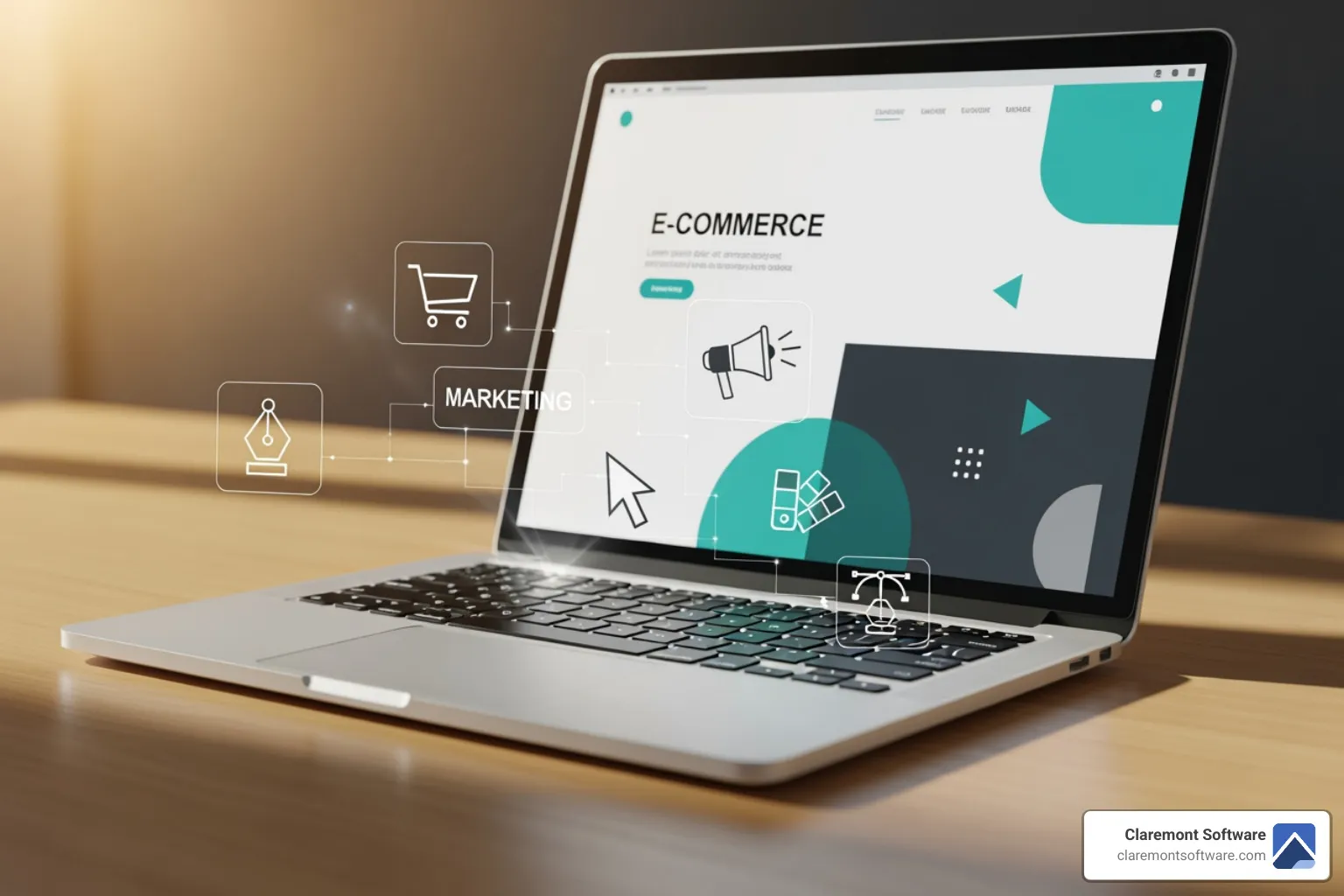
Website solutions for small business are no longer optional—they're a fundamental component of modern commerce and essential for survival. In today's digital-first world, your website is your primary storefront, your lead generation engine, and your brand's anchor. Whether you need an all-in-one platform with integrated marketing tools, an e-commerce-ready system built for selling products online, or a design-focused approach to create a stunning portfolio for your services, the right website solution can completely transform how customers find, perceive, and trust your business.
Top website solution approaches for small businesses:
- All-in-One Platforms - Best for most businesses needing flexibility, marketing tools, and built-in features (starting around $16-17/month)
- E-commerce-Ready Systems - Purpose-built for online stores with inventory management and multi-channel selling (starting around $29/month)
- Design-Focused Builders - Ideal for service businesses and creatives prioritizing stunning visuals and portfolios (starting around $16/month)
- Budget-Friendly Options - Quick setup with AI assistance and affordable hosting (starting around $3/month)
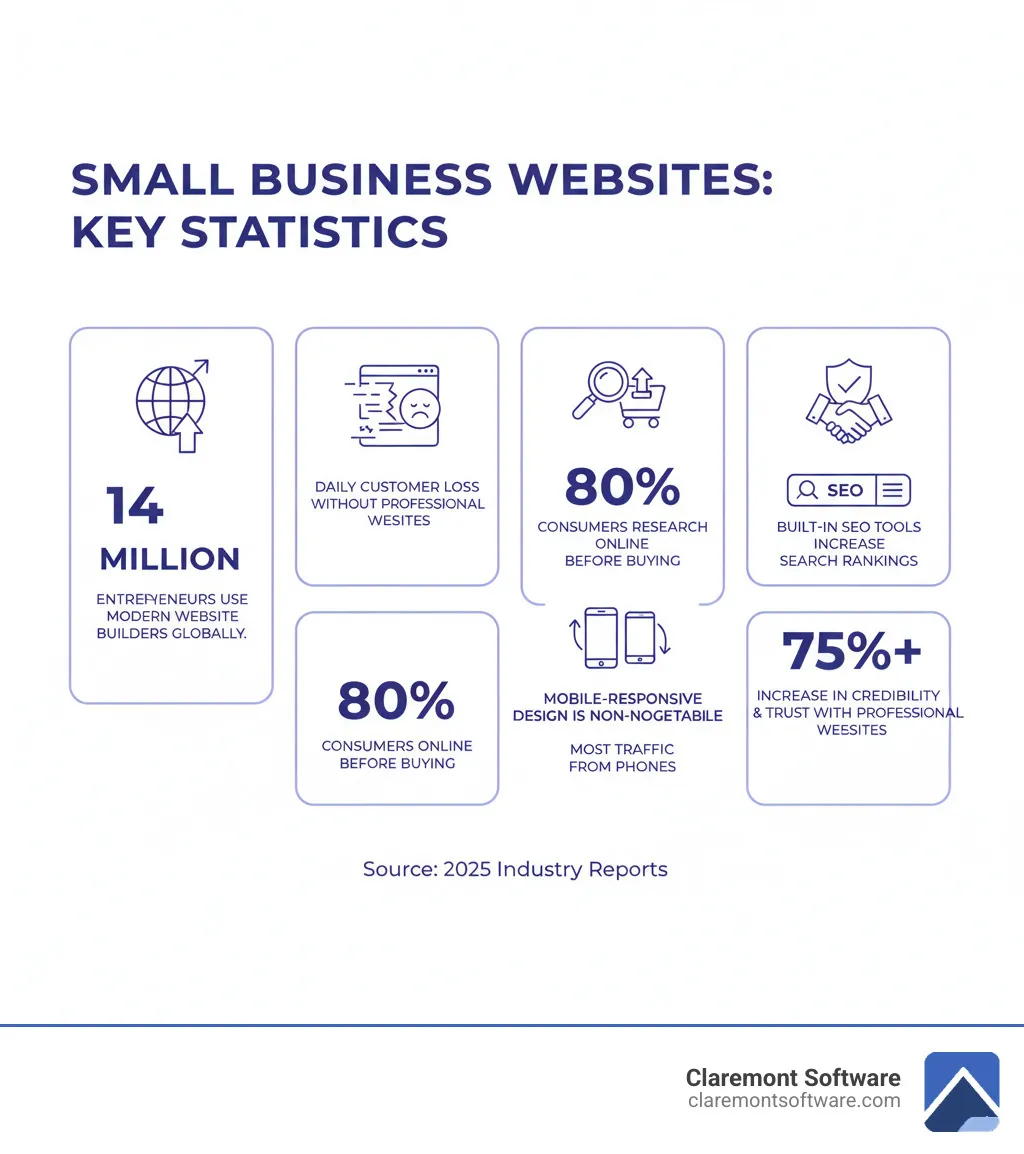
The stakes are incredibly high. Our extensive research—over 300 hours dedicated to analyzing website builders—confirms a critical reality: businesses with professional websites earn customer trust, appear higher in search results, and consistently convert visitors into paying clients. A polished, functional site signals credibility and stability, making customers feel more comfortable making a purchase or inquiry. Meanwhile, businesses without a professional online presence are effectively invisible to the 80% of consumers who research online before buying, losing ground and revenue to their competitors every single day.
The good news? Building a professional website has never been more accessible. Modern website solutions offer drag-and-drop editors, AI-powered tools, and built-in SEO features that require zero coding knowledge. Many include free trials, allowing you to test before committing.
But here's what matters most: your website needs to work as hard as you do. It's not just a digital brochure; it's an active member of your team. A high-performing site should actively capture leads through strategic forms and calls-to-action, showcase your expertise with compelling case studies and blog content, process payments securely for products or services, manage appointments automatically to fill your calendar, and rank in Google searches to attract a steady stream of qualified traffic—all while looking flawless and professional on every device, from desktops to smartphones.
I'm James Smith, and for over 25 years, I've been dedicated to building powerful website solutions for small business owners right here in communities like Gurnee and Libertyville. I've partnered with everyone from local service providers needing a simple, neat site to retailers launching complex e-commerce platforms. I've seen what works and what doesn't. In this guide, I'll distill those decades of experience to walk you through exactly what to look for, how different approaches compare, and which solution truly aligns with your specific business goals and budget.
What to Look For: Essential Features in a Small Business Website Solution
Shopping for website solutions for small business can feel overwhelming. You're bombarded with promises of "the best" platform, "unlimited" features, and "revolutionary" tools. But here's the truth: what matters most isn't the flashiest features—it's finding the right tools that actually help your business grow.
Let's cut through the noise and focus on what you truly need.
Ease of use should be at the top of your list. If you're spending hours trying to figure out how to add a photo or update your hours, something's wrong. The best website solutions offer intuitive editing tools that feel as natural as posting on social media. Look for drag-and-drop interfaces that let you move elements around without touching a single line of code. You should be able to update your site yourself, whenever you need to, without calling for help every time.
Your website is your digital storefront, so design flexibility and professional templates matter more than you might think. First impressions happen fast—within seconds, actually. You need a solution that offers visually appealing templates you can customize to match your brand. The good news? Modern platforms provide hundreds of industry-specific templates designed by professionals. Whether you run a restaurant in Gurnee or a consulting firm in Libertyville, you can create a unique online presence that reflects your business personality.
Here's something non-negotiable: mobile-first design. Right now, someone is searching for your services on their phone. If your website looks broken or loads slowly on mobile devices, they're clicking the back button and calling your competitor instead. Quality website solutions automatically optimize your site for smartphones and tablets, ensuring every visitor gets a seamless experience regardless of how they find you.
Getting found online requires built-in SEO (Search Engine Optimization) tools that help your website appear prominently in search results when potential customers are looking for what you offer. At a minimum, you should be able to easily customize page titles, meta descriptions (the short text snippets that appear in search results), and image alt text. More advanced platforms offer keyword optimization suggestions, sitemap generation, and even AI-powered SEO assistance to guide your content strategy. These SEO features are then amplified by marketing integrations. The ability to seamlessly connect your website to email marketing platforms, social media channels, and online advertising tools is crucial. These tools must work in concert to not only drive traffic but to nurture those visitors and ultimately turn them into loyal customers. If you're already getting traffic but not seeing results, our article on Why Your Website Isn't Bringing You Leads and How to Fix It can help you diagnose the problem.
For businesses selling products or services, e-commerce functionality is what transforms your website from a passive brochure into an active revenue generator. This goes beyond a simple 'Buy Now' button. You need a robust system with the ability to showcase products with high-quality galleries, manage inventory across online and physical locations, process secure payment options that are PCI compliant, and handle complex shipping logistics. For service-based businesses, integrated appointment scheduling systems are a game-changer. They let customers book and pay for consultations or services directly from your website, eliminating endless phone tag and ensuring you never miss an opportunity to fill your schedule.
Finally, never compromise on security features and customer support. Your website will handle sensitive customer information, from contact details to credit card numbers. An SSL certificate, which encrypts the data transferred between your site and its visitors (and puts the 's' in 'https://'), isn't just a technical feature—it's a fundamental requirement for building trust. Modern browsers actively warn users away from sites without one. Beyond SSL, look for solutions that offer built-in threat prevention, regular malware scanning, and real-time security monitoring to protect your business and your customers from digital threats.
And when you hit a snag at 9 PM while trying to update your site? 24/7 customer support becomes your best friend. Whether you prefer live chat, phone support, or detailed help centers, make sure assistance is available when you need it. The right support team can save you hours of frustration and keep your site running smoothly.
The bottom line? The right website solution for small business combines user-friendly tools, professional design options, mobile optimization, marketing capabilities, and rock-solid security—all backed by support that's there when you need it.
Comparing the Top Website Solution Approaches for Small Business
Choosing the right website solution for small business isn't a one-size-fits-all decision. Think of it like picking a vehicle for your business—what works perfectly for a retail shop might be overkill (or underwhelming) for a creative studio or a service provider. Your specific needs, budget, and long-term goals will guide you toward the best approach.
We've identified three primary strategies that cover most small business needs. Each has its own sweet spot, and understanding these differences can save you months of frustration and thousands of dollars.
Here's how these approaches stack up:
| Solution Approach | Best For | Price Range (Monthly) | Key Strengths |
|---|---|---|---|
| All-in-One | Most businesses needing flexibility and growth | $16-30+ | Comprehensive toolkit with marketing, CRM, and analytics built-in; reduces need for third-party apps; strong SEO guidance and appointment scheduling; highly scalable for growing businesses. |
| E-commerce-Ready | Retail businesses and online stores | $29-299+ | Specialized tools for sales like discount codes and gift cards; robust inventory management across multiple channels; seamless POS integration for physical stores; powerful abandoned cart recovery features to recapture lost sales. |
| Design-Focused | Creatives, service businesses, portfolios | $16-52+ | Award-winning, visually stunning templates that make a powerful first impression; superior customization for brand identity; neat portfolio and gallery displays; integrated booking tools perfect for service professionals. |
The truth is, many small businesses in Gurnee, Libertyville, and throughout Lake County, IL initially gravitate toward the All-in-One approach. It offers the promise of flexibility to start simple and scale, which is appealing. However, this 'jack-of-all-trades' approach can sometimes mean being a master of none, with limitations on deep customization or specialized features. If you're primarily selling products online, the E-commerce-Ready approach provides specialized tools that make managing a retail operation much smoother, though these platforms can be less flexible for content-heavy or service-based sites. For photographers, designers, or consultants who need to make a stunning visual impression, the Design-Focused approach delivers templates that truly showcase their work, but sometimes at the expense of robust marketing or advanced SEO capabilities.
Before we dive deeper, it's crucial to analyze your business needs with a long-term perspective. Are you primarily selling products, or are you offering services? Do you need a simple appointment scheduler, or a complex booking system integrated with your CRM? Will you be blogging occasionally, or implementing a serious content marketing strategy to attract customers? Understanding your core requirements now is the first step. The second, more critical step is anticipating your future needs. Choosing a solution that can't grow with you can lead to costly and time-consuming migrations down the road, a common pitfall for businesses that outgrow their initial DIY platform.
Let's explore each approach in detail, so you can make an informed decision that sets your business up for success.