Unlock growth with professional ecommerce web design services. Optimize UX, mobile responsiveness, speed, and SEO to boost sales, build trust, and stay competitive in 2025's booming digital market. Transform your online store into a high-converting asset today.
Why Your Online Store Design Matters More Than Ever
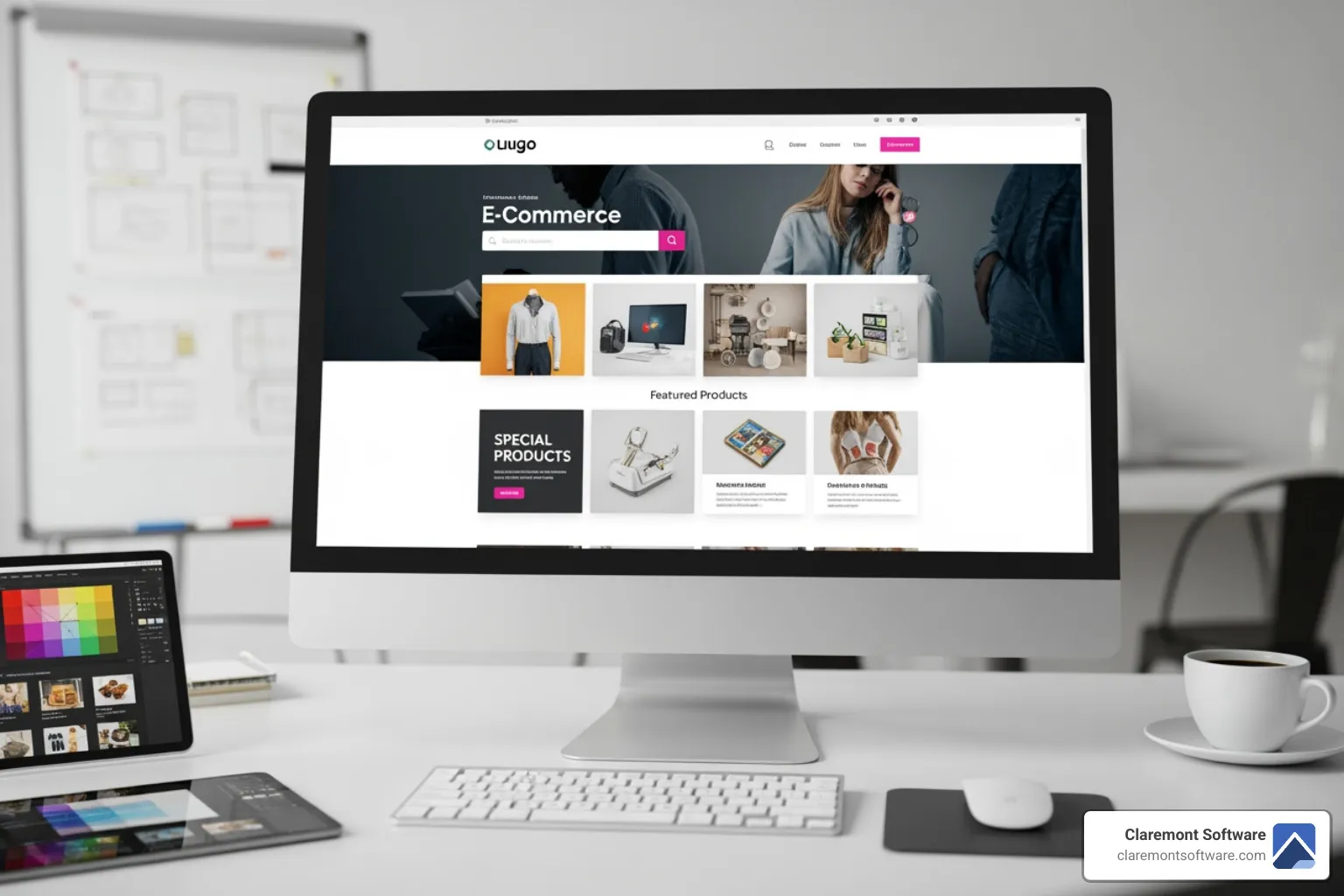
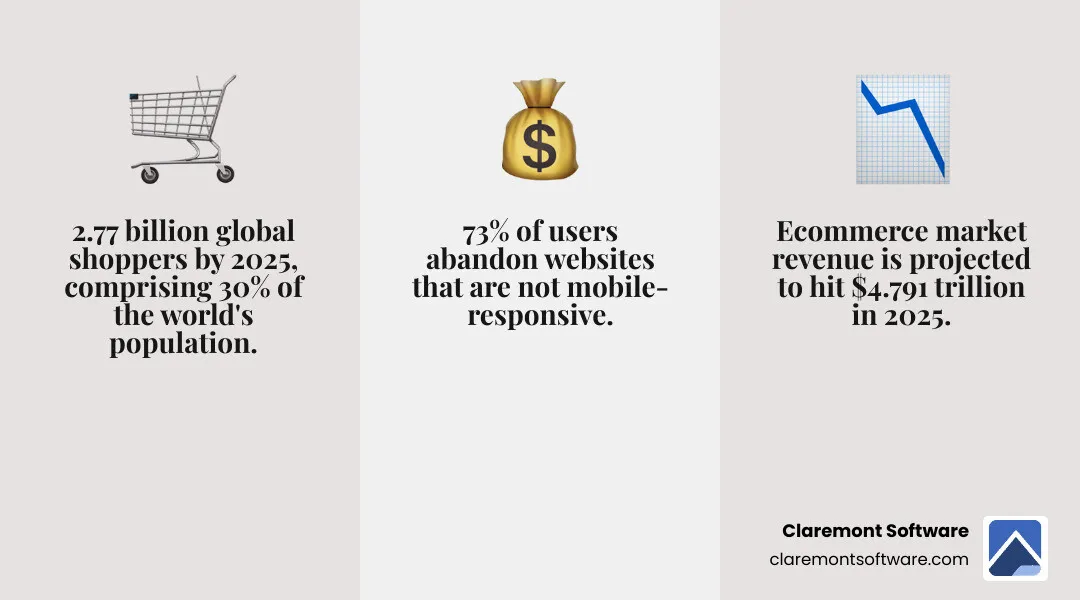
Ecommerce website design services help businesses create professional online stores that attract customers, build trust, and drive sales. With 2.77 billion people shopping online and 21% of all retail purchases happening digitally by 2025, your website is your most critical sales channel. A professional design service focuses on:
- Custom storefront design custom to your brand
- Mobile-responsive layouts for all devices
- User experience (UX) optimization to increase conversions
- Secure payment gateway integration
- SEO-friendly architecture for better visibility
- Speed optimization to reduce bounce rates
Poor design has a direct cost. Research shows 73% of users leave websites that aren't responsive. For every 10 seconds your mobile site takes to load, your bounce rate can increase by 123%. That's lost revenue walking out your digital door. Your competitors are investing in fast, intuitive stores, and professional ecommerce design is more accessible than ever to help you compete.
I'm James Smith, and I've been designing and optimizing ecommerce websites for over 25 years, working with everyone from multi-million-dollar retailers to growing small businesses. I've seen how the right ecommerce website design services transform struggling stores into revenue-generating machines. Let me show you what works in 2025.
10 Core Components of an Effective Ecommerce Website
Think of your ecommerce website as a digital version of a physical store. To create a shopping experience customers enjoy, we focus on ten essential components.
- User Interface (UI): The visual layer of your site, including buttons, menus, and color schemes. A clean UI makes browsing effortless.
- User Experience (UX): The invisible logic that makes the site work. Can customers find products easily and check out without friction?
- Brand Identity: Your site should consistently reflect your brand's personality and values to create a memorable impression.
- High-Quality Media: Since customers can't touch products, your images and videos must be stunning and optimized for speed. Slow-loading images cause 39% of visitors to lose interest.
- Fast Page Load Times: Every extra second of load time increases the chance a customer will leave. Speed optimization is critical for revenue.
- Mobile-First Responsive Design: With over 56% of traffic from mobile, your site must function flawlessly on any device.
- Secure Payment Gateways: Integrating trusted options like credit cards, PayPal, and Apple Pay builds the confidence needed to complete a purchase.
- Clear Calls-to-Action (CTAs): Prominent "Add to Cart" and "Buy Now" buttons are essential. Around 70% of small business sites lack proper CTAs.
- Customer Trust Signals: Reviews, testimonials, and security badges reassure hesitant buyers that you're a trustworthy company.
- Efficient Inventory Management: Your store must sync with your backend systems to prevent selling out-of-stock products.
The Critical Role of UI and UX Design
Imagine a beautiful boutique where you can't find the dressing rooms or checkout. That's great UI with poor UX. In ecommerce website design services, these two are inseparable. Your UI draws customers in, while your UX guides them smoothly from browsing to buying.
We focus on creating a seamless user journey by designing intuitive navigation and a frictionless checkout process. Using data from A/B testing and heatmaps, we see how real users interact with your site, allowing us to continually refine the experience. A well-designed UX doesn't just feel good—it improves conversion rates, boosts customer satisfaction, and strengthens your brand.
Want to dive deeper into how we approach this? Check out more info about our design process.
Website Speed and Mobile Responsiveness
We live in an impatient world. Your customers won't wait for a slow website to load, especially on mobile. Over half of all website traffic comes from mobile devices, so if your site isn't optimized for them, you're closing your doors to a majority of potential buyers.
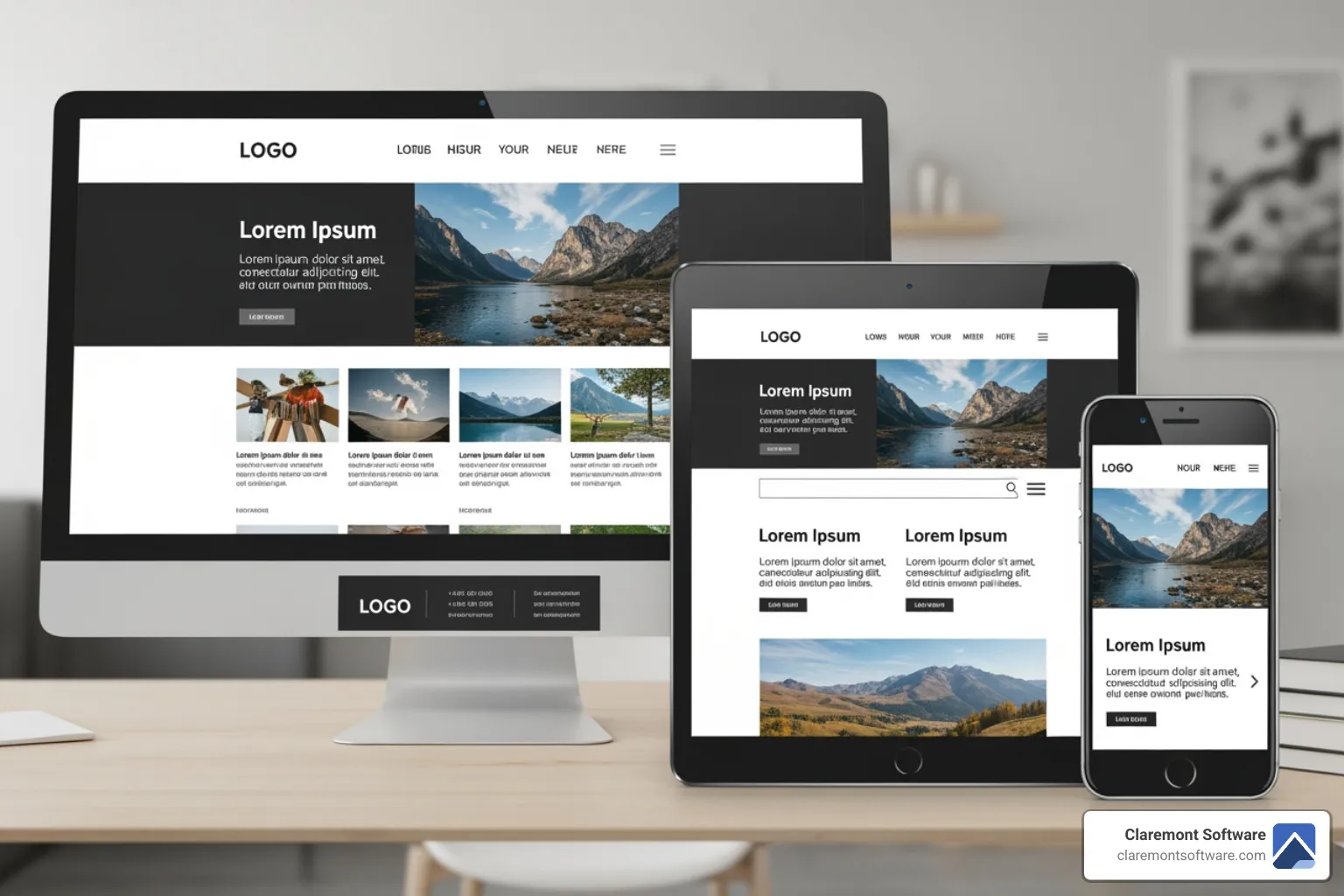
Responsive design ensures your website adapts to any screen size, but it's about more than looks—it's about speed. According to Google research on mobile speed, a 10-second mobile load time can increase the bounce rate by 123%. Those seconds directly translate to lost sales.
We focus on optimizing Core Web Vitals and other performance metrics. Faster load times mean reduced bounce rates, improved user retention, and happier customers who stick around to buy.
How Professional Design Translates to Business Growth
A well-designed ecommerce website doesn't just look good—it makes you money. The return on investment for professional ecommerce website design services is visible in your sales reports.
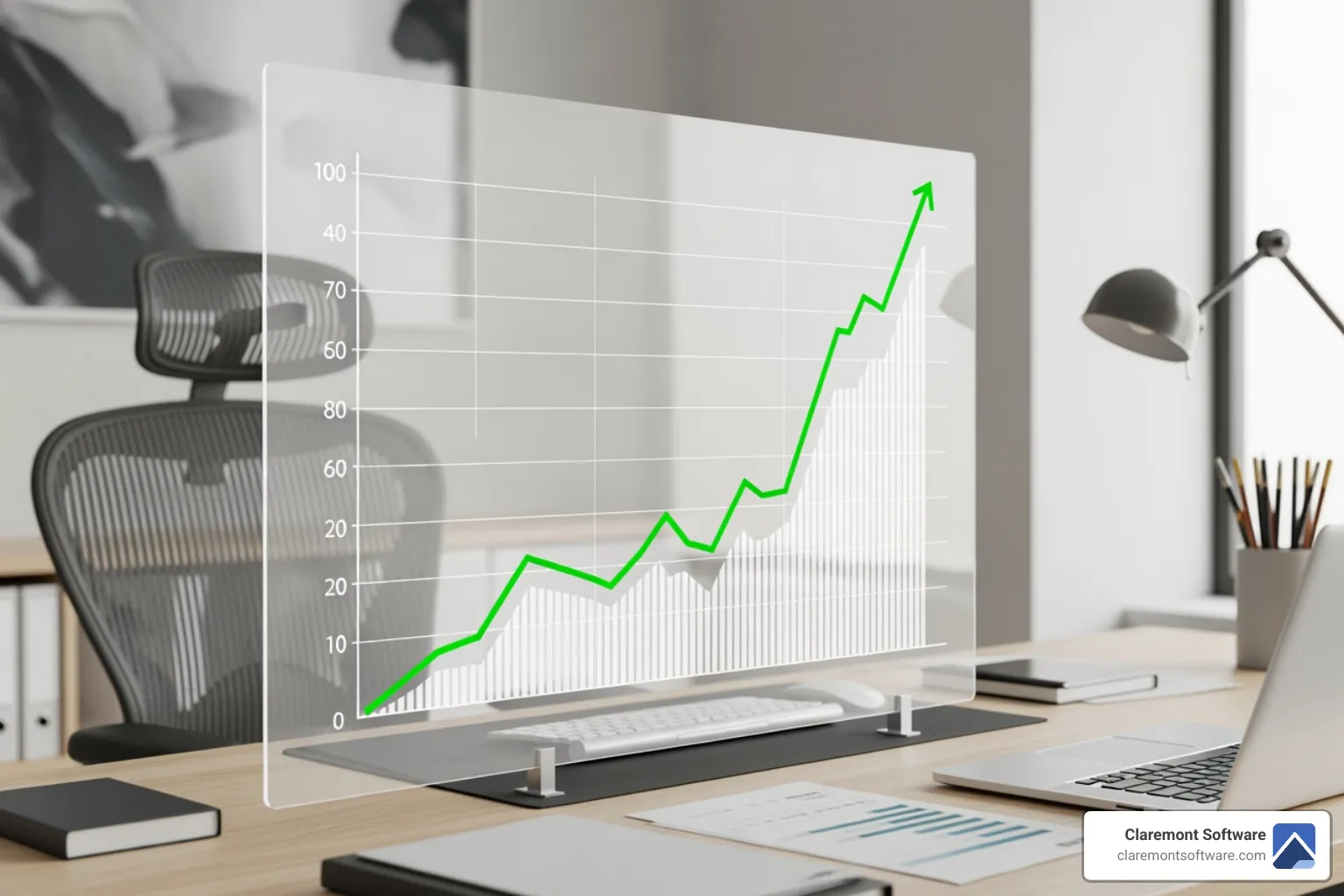
The numbers tell the story. We've seen clients double their conversion rates by streamlining their checkout process or increase revenue by 40% with better product photography and CTAs. This is conversion rate optimization (CRO), where every design decision is refined to turn more visitors into customers.
Beyond immediate sales, a professional website builds brand credibility. When customers land on a polished, trustworthy site, they perceive your business as more reliable. This leads to repeat buyers and a real competitive advantage. While competitors struggle with outdated designs, your store becomes the obvious, trusted choice.
Integrating Design with SEO for Maximum Visibility
The most beautiful website is worthless if no one can find it. That's why we integrate design and SEO from day one.
Our ecommerce website design services build in a strong technical SEO foundation with clean site architecture and fast-loading pages. We also weave in on-page SEO elements like keyword-rich content and compelling meta descriptions to improve click-through rates. This unified approach helps you rank higher in search results, attracting more qualified traffic from people actively searching for your products. One agency tracked an average organic traffic lift of 14% year-over-year for their clients, with some nearly doubling online sales.
This strategy means you're building visibility into your site's foundation, not trying to add it on later. See how we combine design with technical excellence in our Web Development Services.
Building Customer Trust and Brand Perception
In ecommerce, trust is everything. Would you enter your credit card details on a site that looks dated and unsafe? Neither would your customers. First impressions happen in milliseconds, and a professional aesthetic instantly signals that your business is legitimate.
We build trust into every pixel. We strategically place trust badges near checkout buttons and display customer reviews on product pages. Real testimonials are more convincing than any marketing copy. We also create compelling "About Us" pages and ensure policies on shipping and returns are transparent and easy to find.
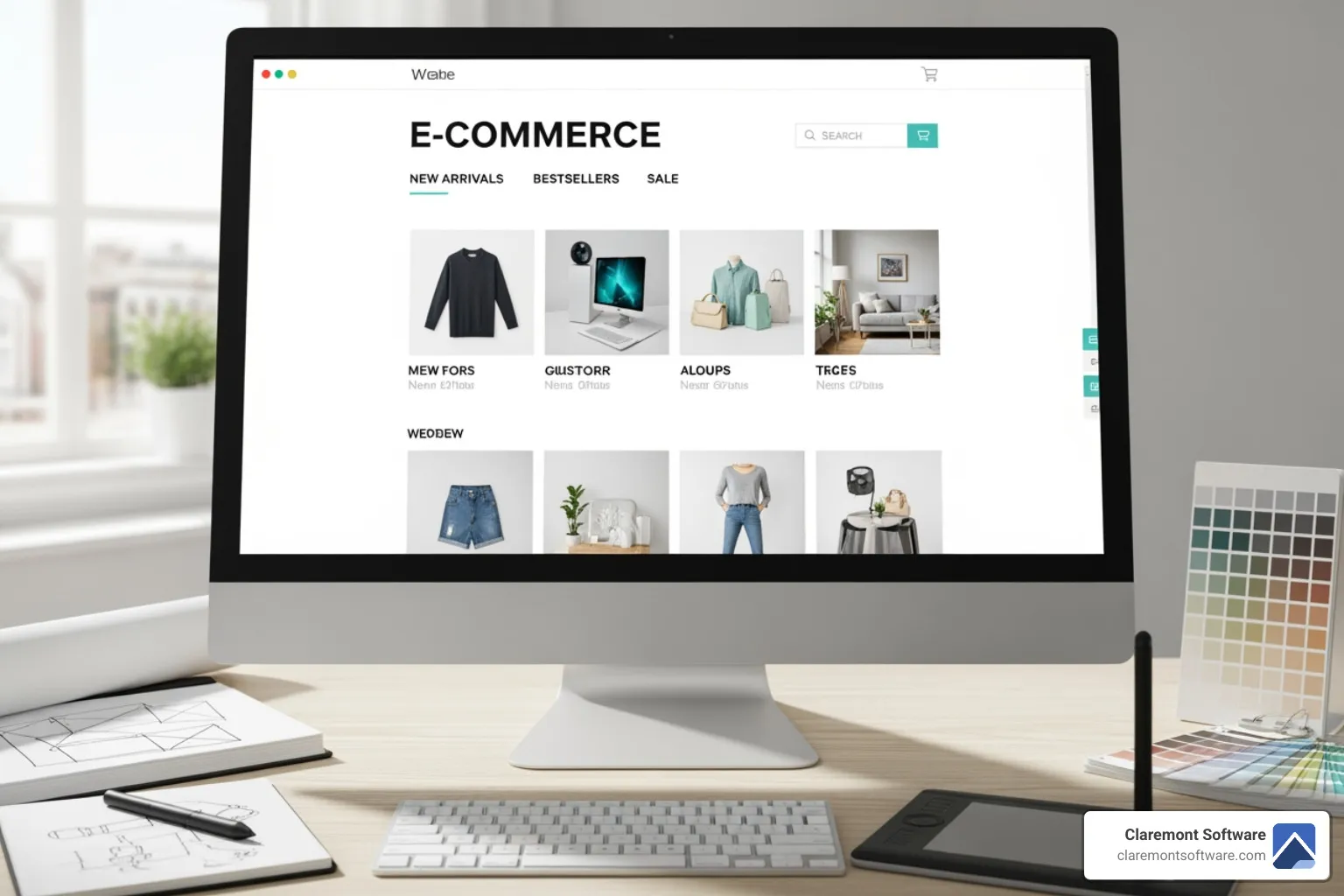
A secure checkout process with SSL certificates and recognizable payment logos is non-negotiable. These elements work together to reduce cart abandonment. When your site looks professional and functions flawlessly, you boost brand loyalty and convince visitors that buying from you is the smart, safe choice.
Key Trends and Technologies in Ecommerce for 2025
The digital shopping world is constantly evolving. We build online stores that are not just modern today but are future-proofed to stay competitive as the industry changes.
Headless commerce is a key trend, separating your website's front-end design from its back-end functionality. This provides incredible freedom to create unique shopping experiences across any device while maintaining a robust, reliable core.
Progressive Web Apps (PWAs) blur the line between websites and mobile apps. They offer app-like speed and reliability—including offline functionality—without requiring a download from an app store. It's the seamless experience customers expect.
Sustainability in ecommerce is also becoming a major factor. Customers want to buy from brands that share their values. Highlighting eco-conscious products, transparent sourcing, or reduced packaging connects with shoppers on a deeper level.
Personalization and AI-Driven Experiences
With the ecommerce market revenue projected to reach $4,791 billion in 2025, generic shopping experiences are no longer enough. Customers expect experiences custom to them.
AI-powered product recommendations can transform your store into a personal shopping assistant, analyzing customer data to create personalized journeys. Modern chatbots provide helpful 24/7 support, answering questions and guiding shoppers. Dynamic content adapts to individual browsing history, showing one customer outdoor gear and another formal wear. This AI-driven approach dramatically boosts engagement and conversion rates by helping customers find what they want faster.
B2B vs. B2C Ecommerce Design Considerations
Not all online stores are the same. The ecommerce website design services for a B2B manufacturer are vastly different from those for a B2C fashion brand.
B2C shopping is often an emotional journey, driven by beautiful visuals and strong branding. The design encourages browsing and impulse buys with a quick, satisfying checkout.
B2B purchasing is logical and involves higher stakes. A procurement manager needs detailed specifications, not just pretty pictures. B2B design prioritizes efficiency with features like:
- Account management portals for easy reordering and purchase history.
- Bulk ordering functionality.
- Custom pricing and tiered discounts that apply automatically.
- Integration with ERP and CRM systems for seamless workflow.
The B2B buyer journey is designed to facilitate complex, high-risk decisions. Each site must reflect its specific business model and customer expectations. Explore how we tailor solutions to your needs with our custom solutions.
Choosing the Right Partner for Your Ecommerce Website Design Services
Finding the right partner for your ecommerce website design services is about more than just building a website. It's about finding a team that understands your vision and can deliver measurable results. This decision will shape your online success for years.
When evaluating partners, start by reviewing their portfolio. Do their designs resonate with you? Have they worked in your industry? Next, dig into client testimonials and case studies for feedback on communication, project management, and, most importantly, results. A good agency will have a clear communication process and keep you informed at every stage.
Technical expertise is non-negotiable. Ensure they have experience with relevant platforms (Shopify, WooCommerce, etc.) and a strong grasp of SEO and security. Industry specialization is also a major plus, as it brings valuable insights.
At Claremont Software, we've been helping businesses across Gurnee, Libertyville, Lake County, and throughout Illinois build successful online stores for years. We believe in transparency, collaboration, and delivering results. Considering a site update?
Understanding Project Costs and Timelines
"How much will this cost, and how long will it take?" The answer depends on your project's unique needs. The project scope is the biggest factor. A simple store costs less and launches faster than a complex enterprise solution with custom features. Your platform choice and design complexity also play a role.
As a general guide, a startup ecommerce site can start from around $25,000, a midsized business might budget $55,000 or more, and large businesses can easily reach $200,000+ for complex builds. The typical project duration is 4 to 6 months, though simpler sites can be faster. Don't forget ongoing maintenance fees for hosting, support, and security, which typically start around $200 annually.
We provide a clear plan and pricing structure upfront, with no hidden fees.
What to Expect from Professional Ecommerce Website Design Services
When you partner with Claremont Software, you get a structured, collaborative process designed for success. Here's what the journey looks like:
- Findy and Planning: We start by understanding your business, audience, and goals to develop a strategic plan.
- Strategy Development: We outline a comprehensive strategy, including platform recommendations and a clear roadmap.
- Wireframing and Prototyping: We create blueprints and interactive mockups to optimize user flow before visual design begins.
- Design Mockups: Our designers craft visual mockups of key pages that bring your brand to life, which we refine based on your feedback.
- Development and Coding: Our developers transform the approved designs into a fully functional ecommerce website.
- QA Testing: We conduct rigorous testing across all devices and browsers to identify and fix any bugs.
- Platform Integration: We connect your store with essential third-party tools like payment gateways and inventory systems.
- Launch and Support: After your final approval, we launch your new store and offer ongoing support to ensure it continues to perform at its best.
Frequently Asked Questions about Ecommerce Design
After 25 years of building online stores, I've heard just about every question. Here are the most common ones, answered with the straight talk you deserve.
How much does a professional ecommerce website cost?
Asking how much an ecommerce site costs is like asking how much a car costs—it depends on what you need. The price is driven by complexity and features. A simple store is less expensive than a custom-built site with complex integrations. Business size also matters; startups might invest in the low tens of thousands, while enterprises can spend six figures.
A custom design offers unique branding and functionality but costs more than a faster, more affordable template-based design. While freelancers may seem cheaper, an agency provides dedicated teams and robust project management.
Remember the long-term value. A high-converting ecommerce site is an investment that prevents lost revenue. A 1% improvement in conversions adds up to real money, and we've seen sites pay for themselves within months.
How long does it take to build an ecommerce website?
The timeline is also nuanced. A typical custom-designed ecommerce site takes between 4 to 6 months from start to launch. Doing it right matters more than doing it fast.
A simple store using a popular platform might launch in 2 to 3 months. However, a project with extensive integrations, custom functionality, or a large product catalog could take 6 months or more. The process includes distinct phases for findy, design, development, and testing. Your timely feedback is also crucial for keeping the project on schedule.
Why is responsive design so important for ecommerce?
If your ecommerce site isn't responsive in 2025, you're closing your doors to over half your potential customers. More than 56% of all website traffic now comes from mobile devices. According to a web design survey, 73% of people will leave a site that isn't responsive.
A poor mobile experience leads to high bounce rates, abandoned carts, and lost sales. It also hurts your SEO, as Google prioritizes mobile-friendly websites in its search rankings. A non-responsive site doesn't just frustrate users—it becomes harder for them to find in the first place.
Responsive design ensures your store works smoothly and converts visitors, whether they're on a phone, tablet, or desktop. It's a foundational element of modern ecommerce website design services.
Transform Your Vision into a High-Converting Store
Your online store is your most powerful sales tool, working 24/7 to grow your business. As we've covered, professional ecommerce website design services are a strategic investment that delivers measurable returns by turning browsers into loyal customers.
The global ecommerce market is worth trillions. To compete, your online presence in Gurnee, Libertyville, Lake County, or anywhere in Illinois needs to do more than just exist—it needs to convert.
Whether you're launching your first store or changing an underperforming site, we can help. Our expertise in user-friendly, SEO-optimized, and mobile-responsive design means your website will be a profitable asset, capturing sales you're currently losing.
Partnering with Claremont Software means working with a team dedicated to helping small businesses achieve real growth. We focus on delivering websites that generate measurable ROI from day one. Your success is our success.
Ready to turn your vision into a high-converting reality? Let's build an online store that exceeds your expectations. Explore our web design and development services today, and let's create something amazing together.